
RESEARCH NOTES
Research Notes
Notes compiled for growing and record-keeping, limited to facts that could be traced to a source. Points that could not be verified, or where sources disagree, are marked as such.
-
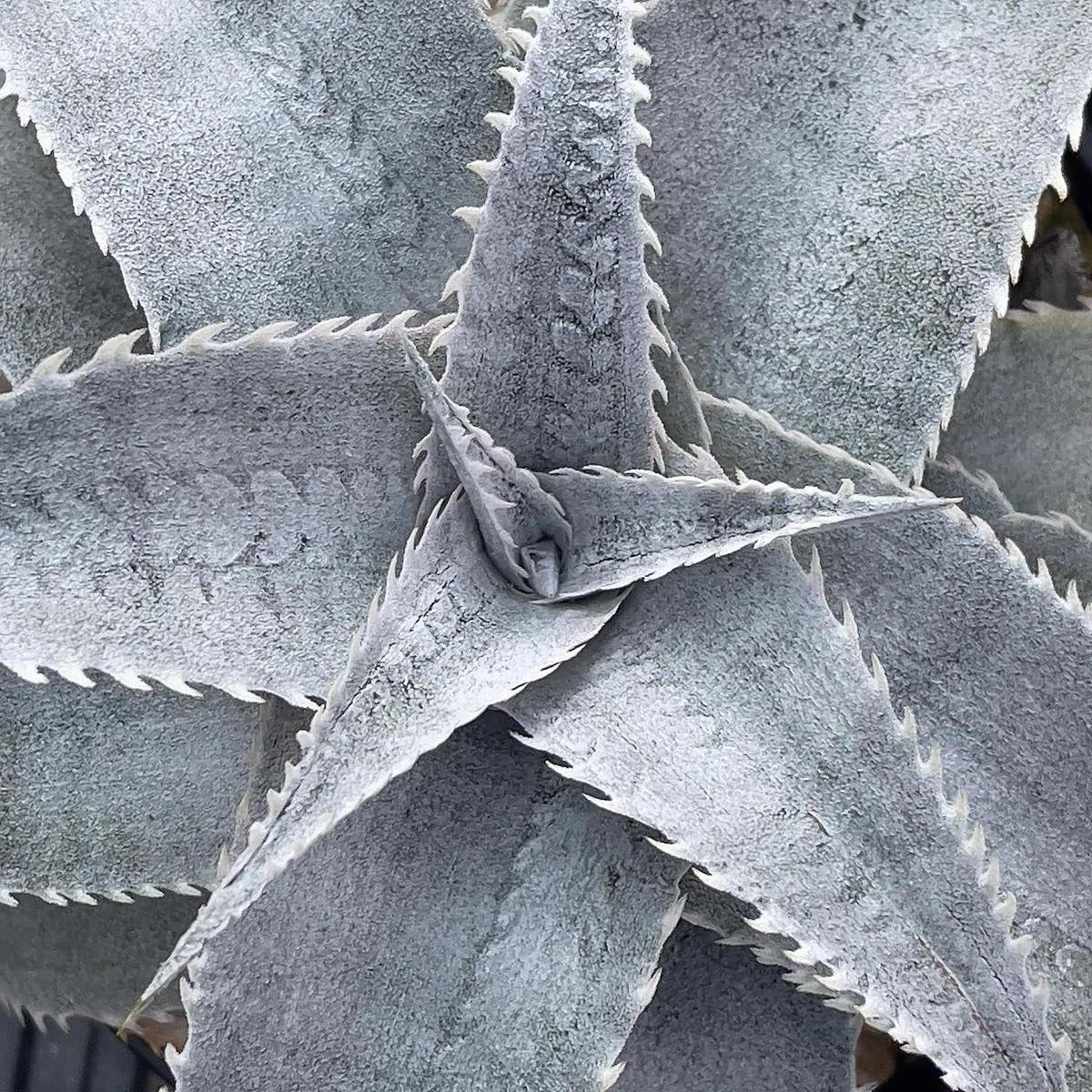 NOTES Basics & Morphology A rock-dwelling rosette bromeliad: spines, trichomes, lateral flowers, and life without a tank.
-
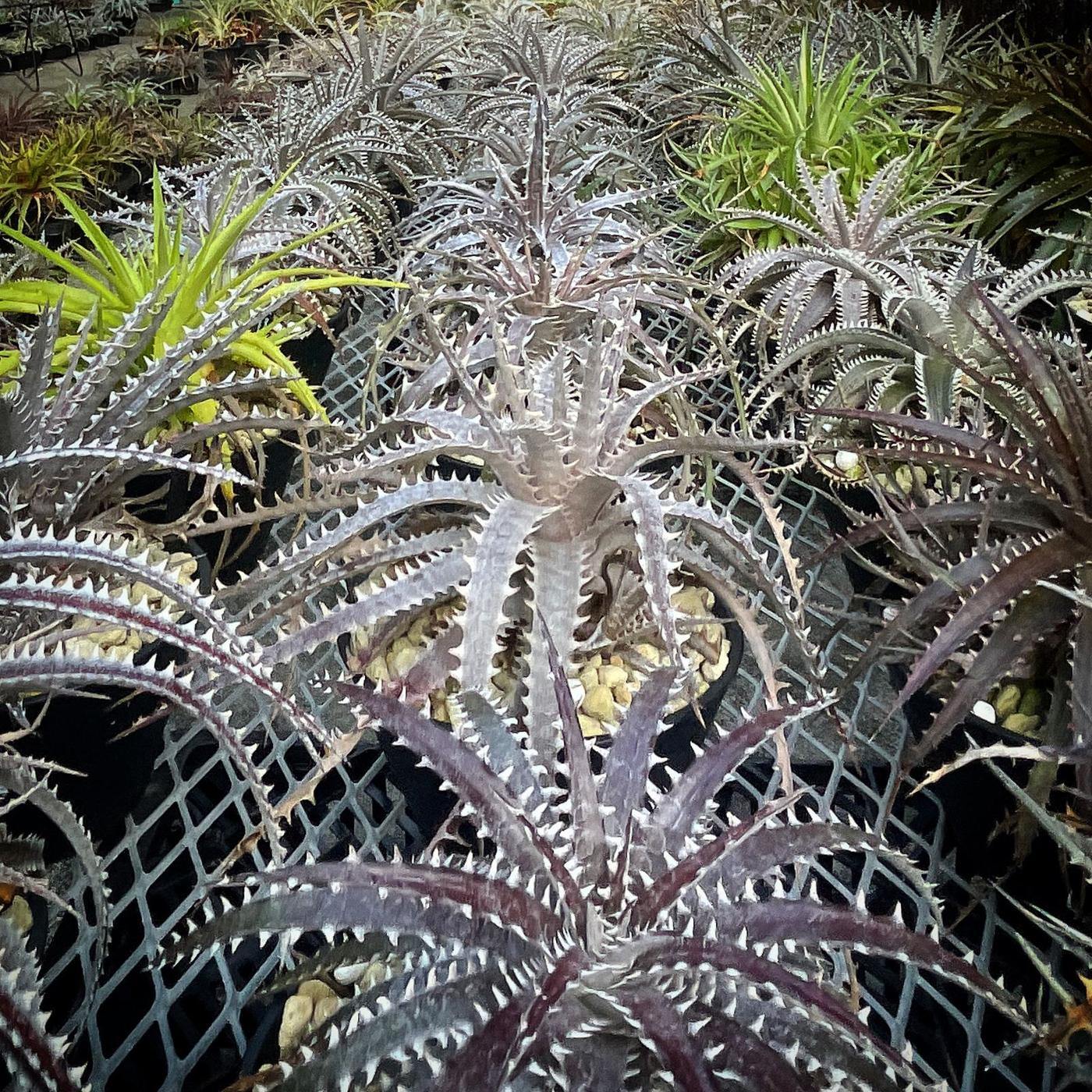 NOTES Growing Dyckia Six topics — light, water, soil and pots, crossing and sowing, temperature, airflow — plus the changing Kochi environment and a calendar for the Kochi year.
- Light Strong light is the baseline. Too little and the plant stretches, and the reds, purples, and blacks of its colouring fade, and the silver dulls.
- Water In the growing season, water generously once the surface of the mix has dried; in the winter rest, keep it on the dry side. Our line on bottom watering is here, too.
- Soil & Pots Growers disagree about the mix; the one premise every position shares is that water must not stagnate around the roots. Fertiliser strength, NPK, and pH divide the sources, too.
- Crossing & Sowing Our practice of logging every cross by year, seed parent, and pollen parent — and the whole sequence, from emasculation and pollination to seed harvest and light-loving sowing.
- Heat and Cold Among the hardier bromeliads as a genus — but tolerance varies greatly by species, and freezing while wet is the state to avoid most.
- Airflow More than humidity itself, it is the combination of heat, still air, and staying wet that causes rot.
-
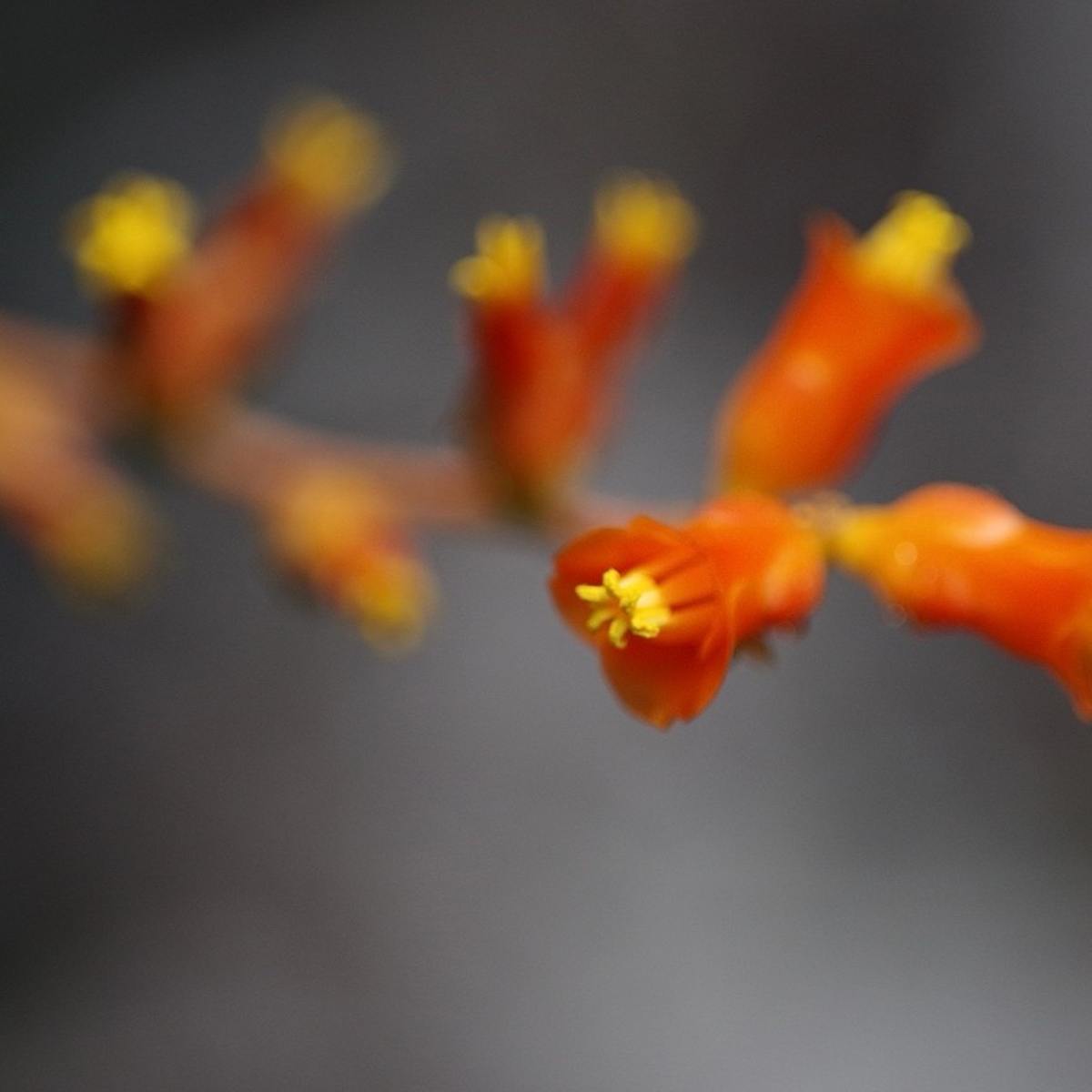 NOTES Flowering Records How the flowers are built and who visits them — and a flowering calendar from our own records in Kochi since 2023.
-
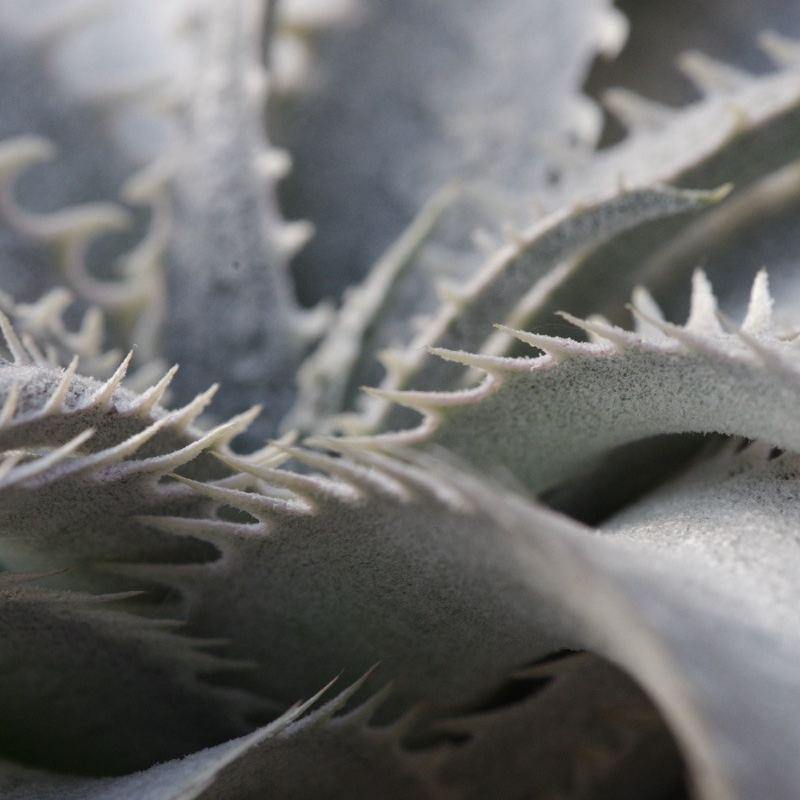 NOTES Trichomes The scales behind the silver — their structure, what they do, and how light and water change the white, from the literature and growers' records.
-
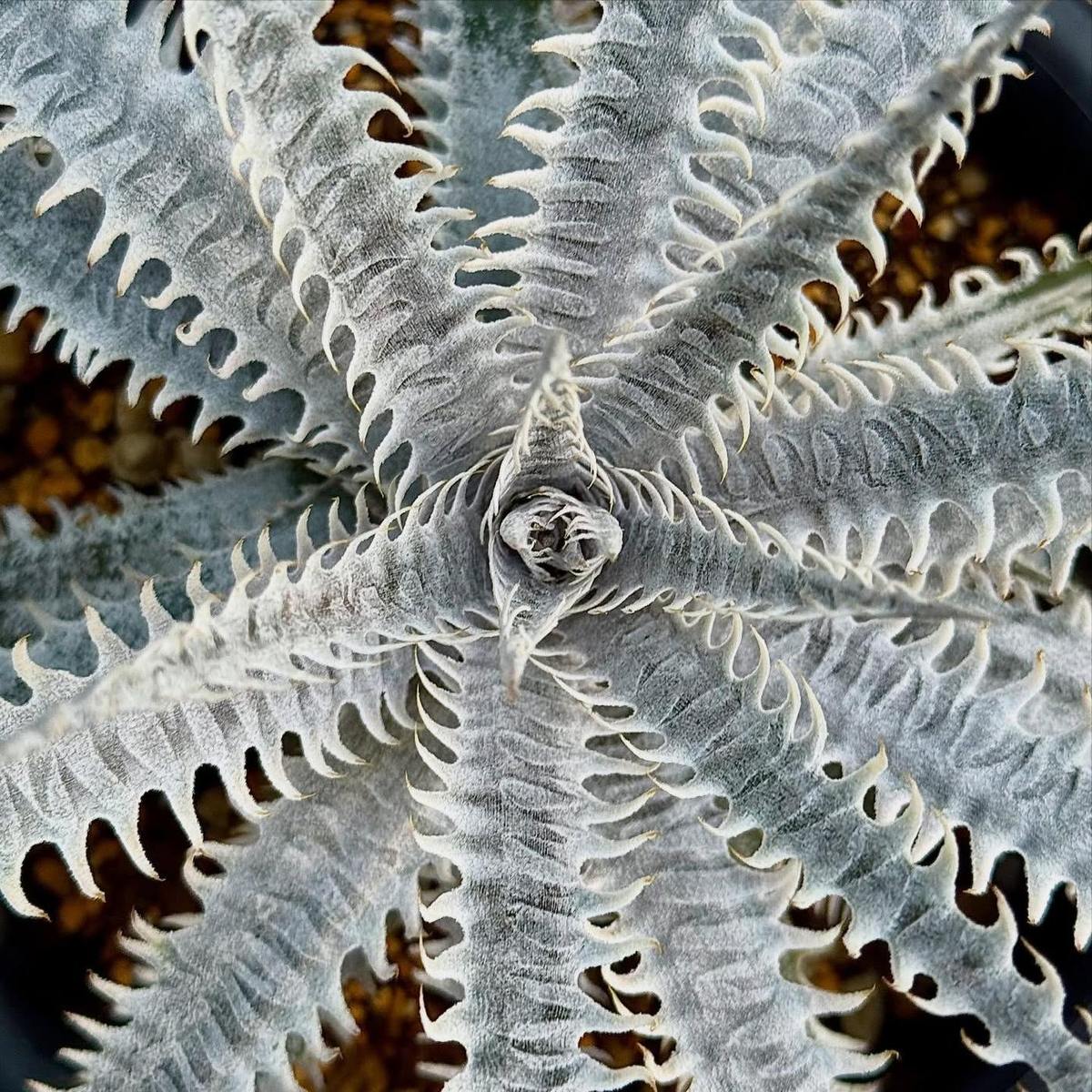 NOTES Our Hybrid Lineages Our original crosses with cultivar pages, as a timeline by year crossed and a map by foundation parent. One named selection so far — ‘Engawa’ — and the next generation and registration ahead.
-
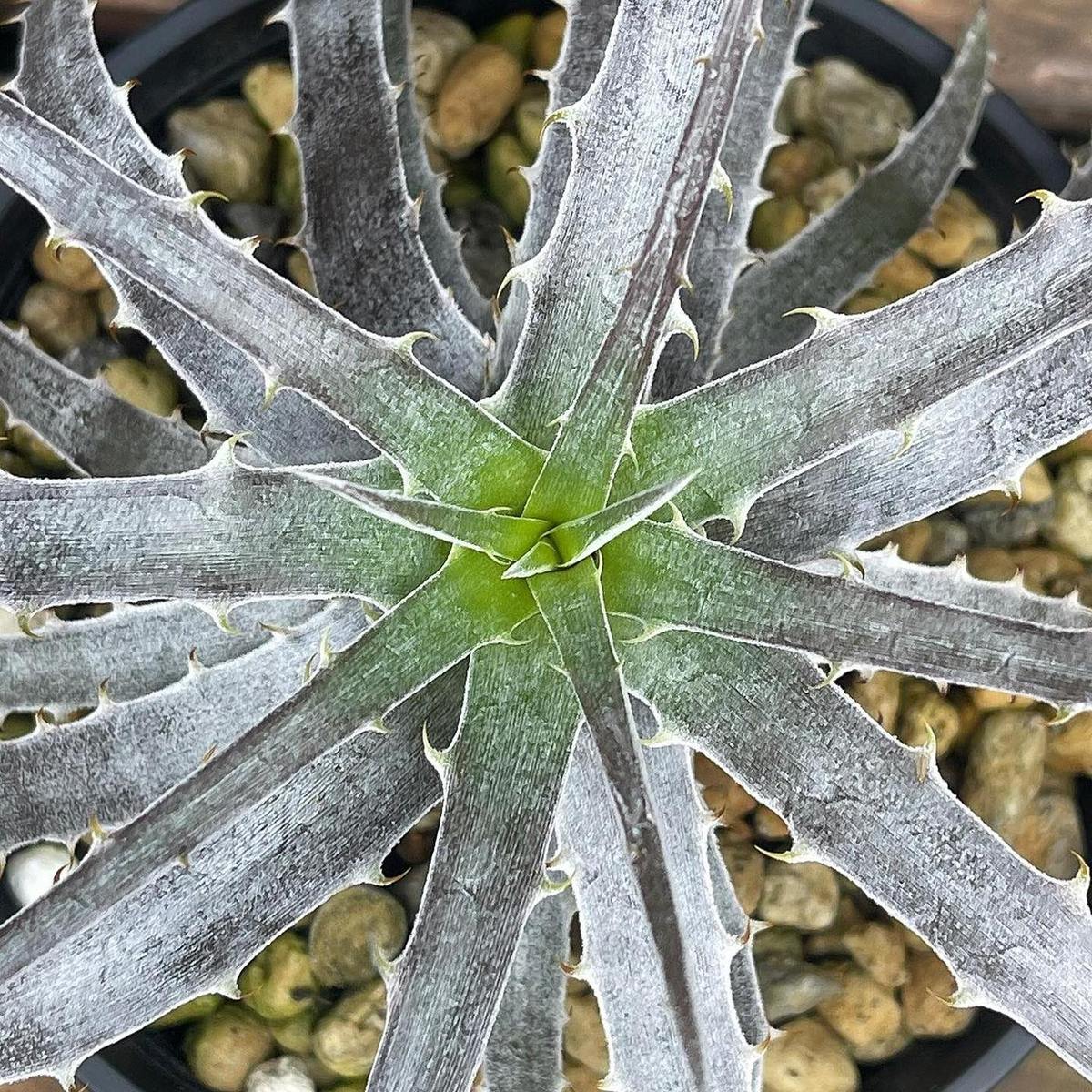 NOTES Reading Spines and Form Identification starts with the spines on the leaf margin — the characters the protologues and flora keys use, and where environment-driven form takes over, from our records and the sources.
-
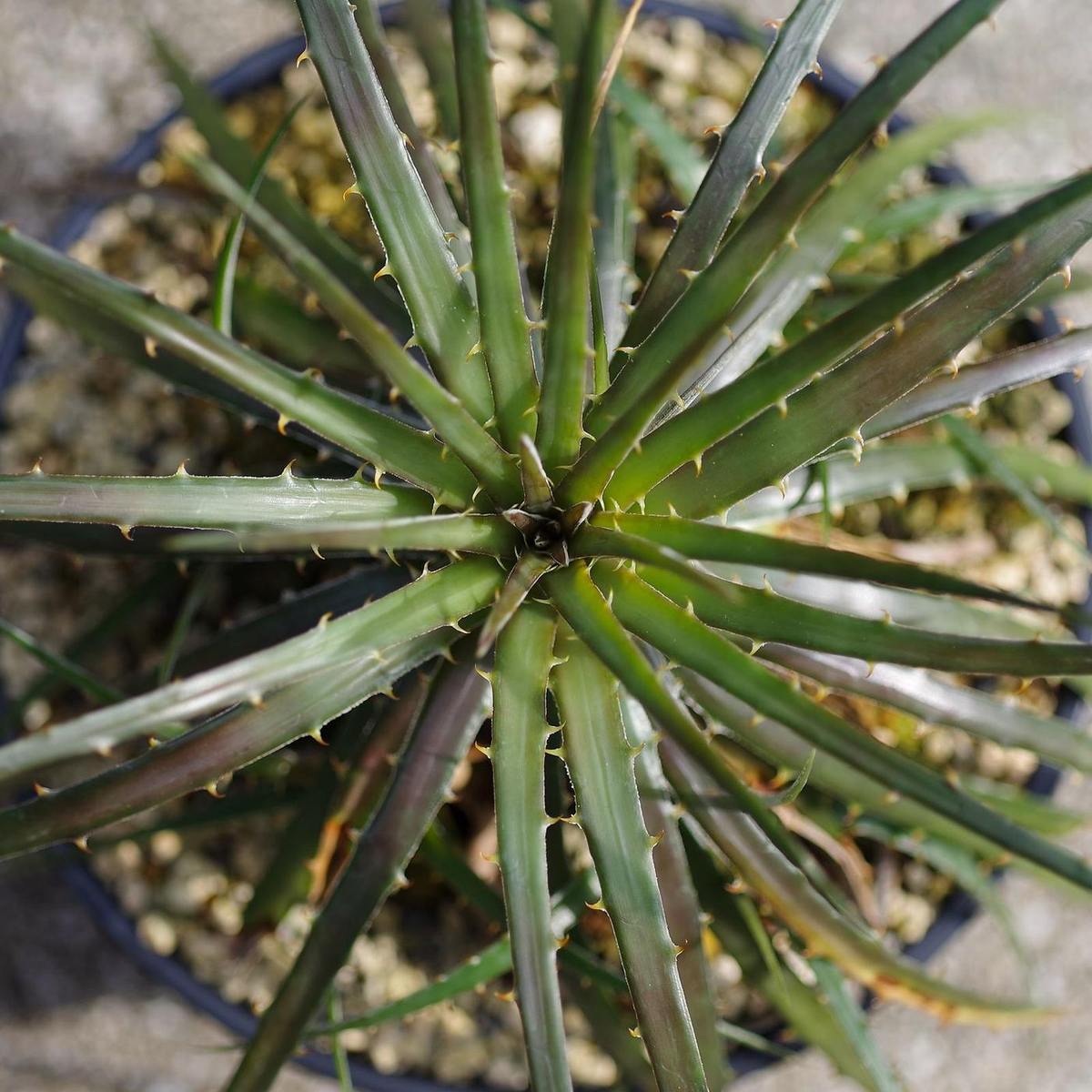 NOTES Species Profile — Dyckia monticola Species Profiles, no. 1. Our “eternal favourite” monticola is no hybrid but a species of the Quiriri highlands, described in 1962 — reread from its protologue, habitat and morphology, and its record in Kochi.
-
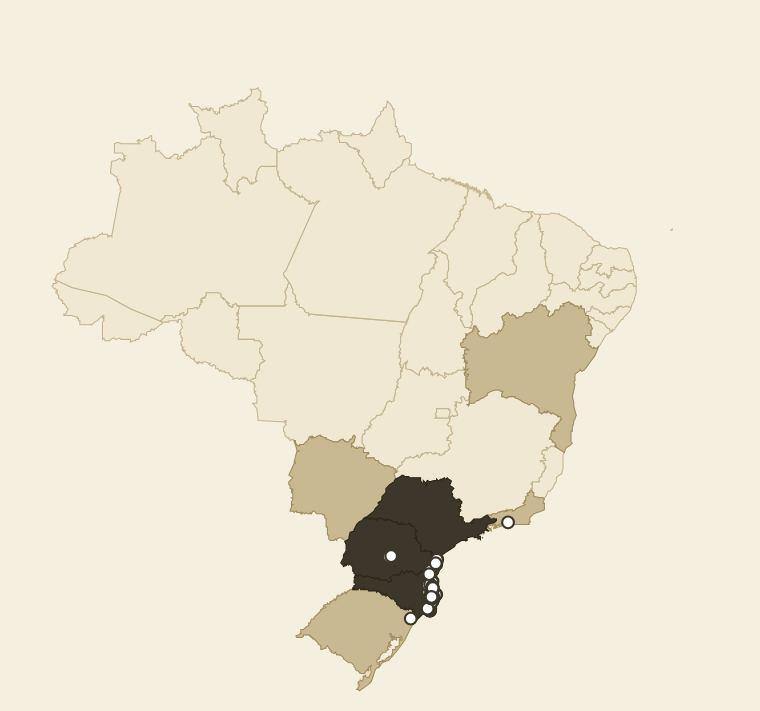 NOTES Species Distributions Distribution maps for the species we grow or study, built state by state from GBIF specimens and wild iNaturalist observations. Disagreements with POWO and Flora do Brasil are noted as needing confirmation.
-
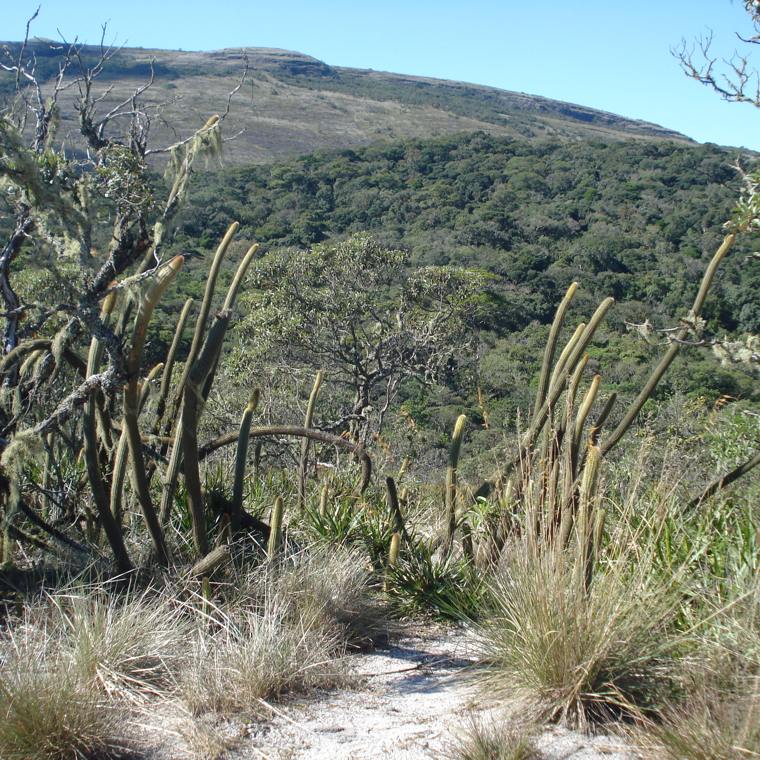 NOTES Habitats and Conservation Assessments The Dyckia on Brazil's national red list — how to read the assessment categories, and the habitats being lost to dams, mining and collecting, with each source kept apart.
-
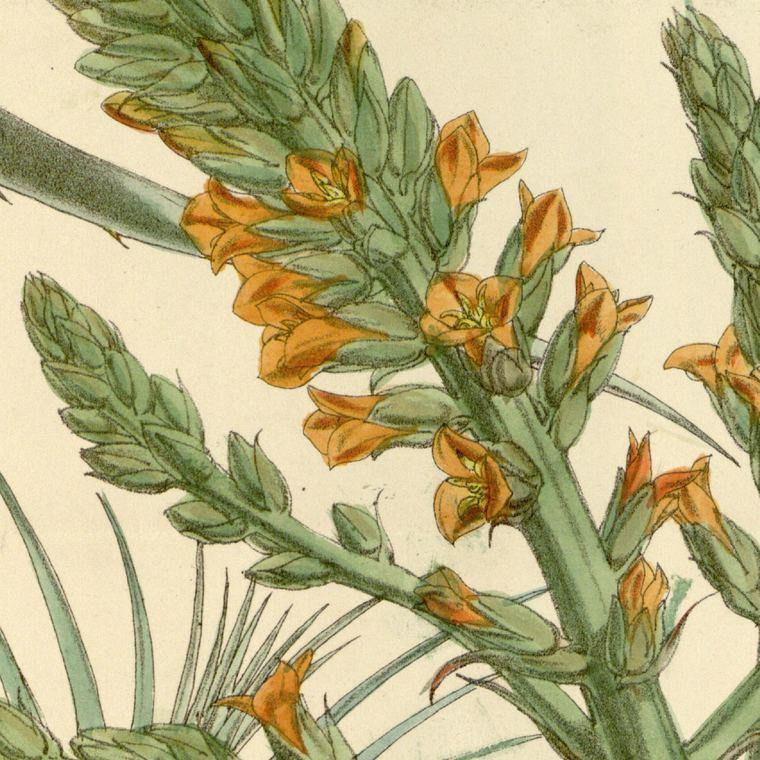 NOTES Classical Botanical Plates Three public-domain plates of Dyckia species from nineteenth-century botanical publications — Curtis's Botanical Magazine (1877), Refugium Botanicum (1870) and the Bonite atlas (1851) — each reproduced with its source stated.
-
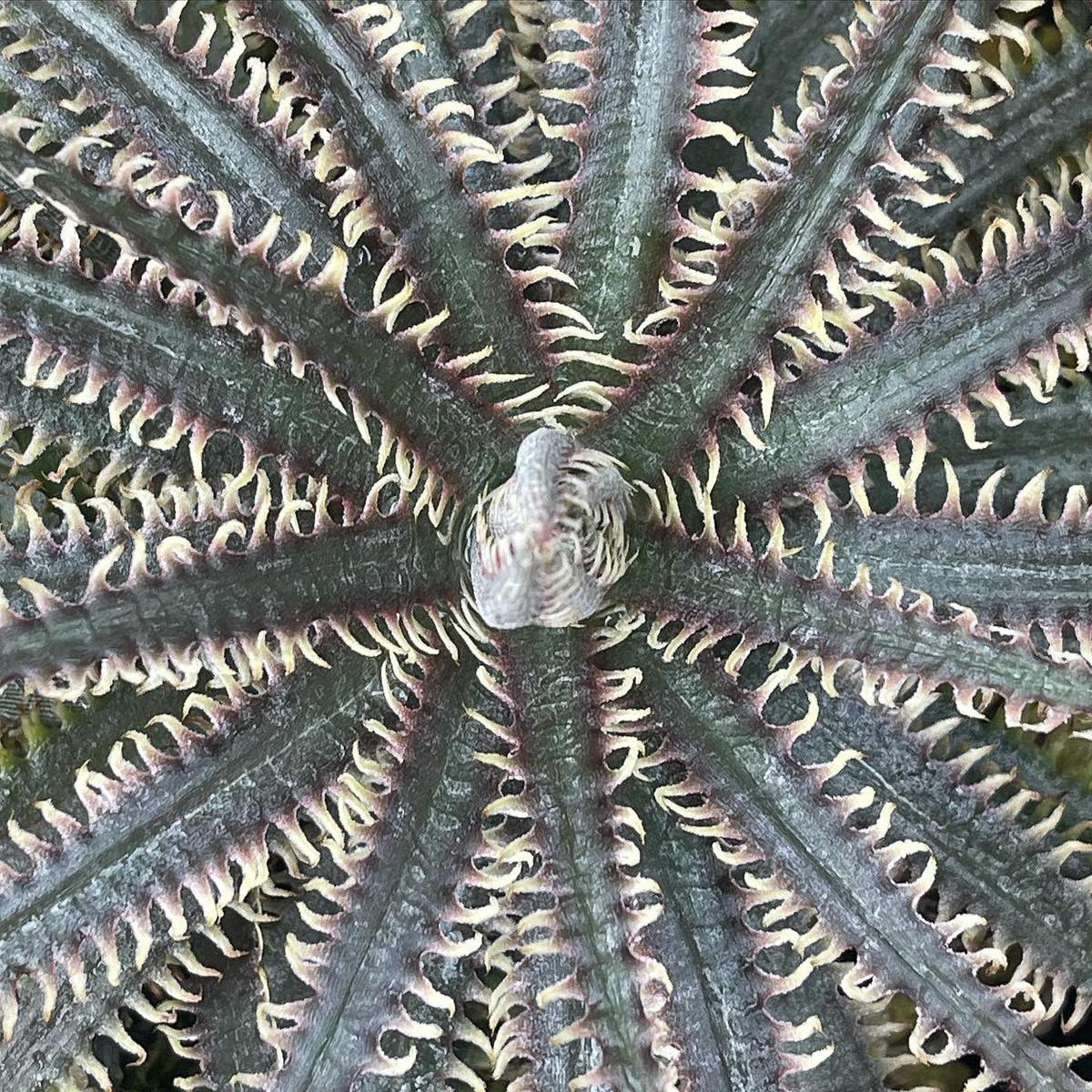 NOTES Names & Cross Formulas Seed parent × pollen parent, F1/F2 generations, the abbreviations ML / BS / DM / HH / 4OJS, and record tags.
-
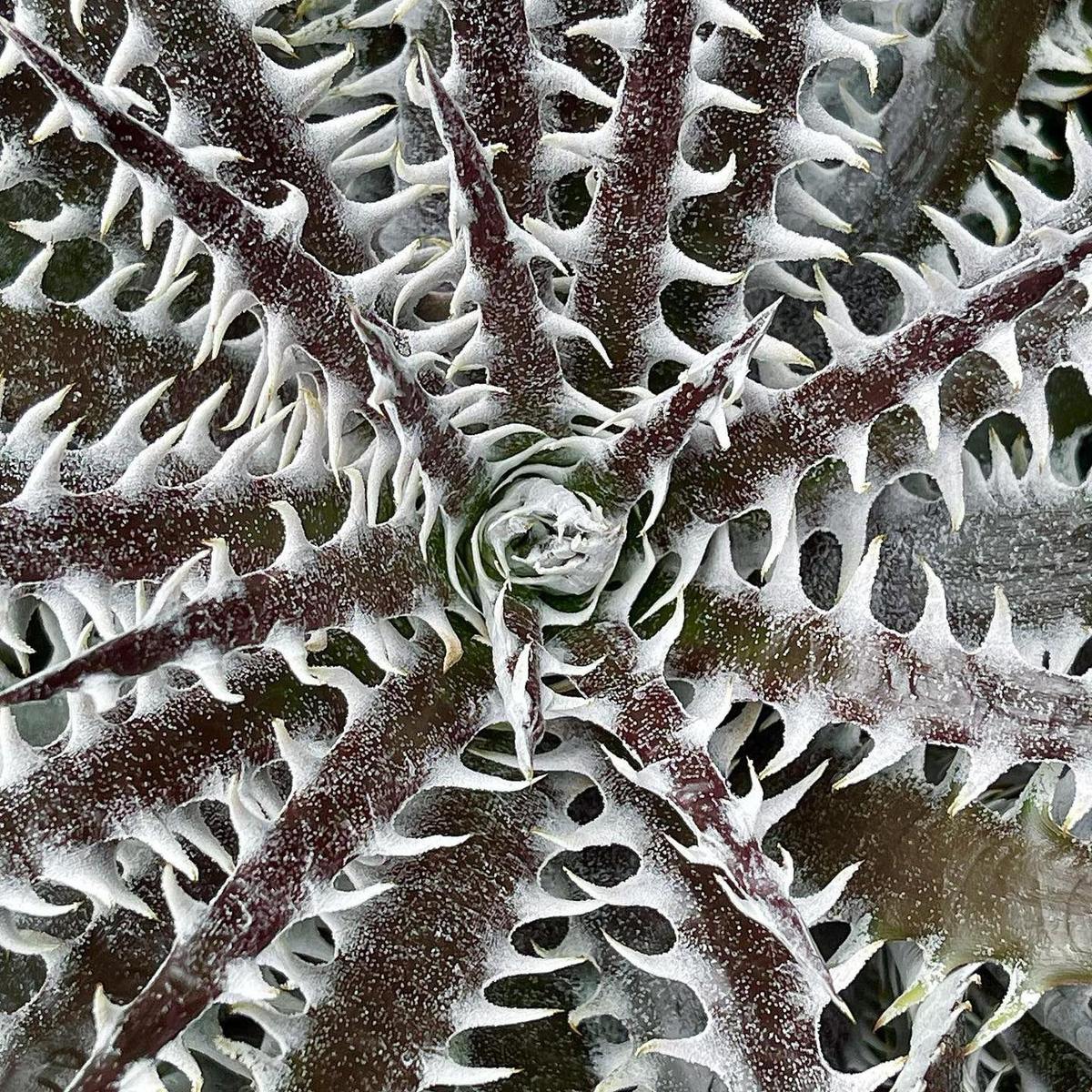 NOTES BSI & Cultivar Registration What the BSI does, the Dyckia recorded in the Bromeliad Cultivar Register, and the Bromeliad Society of Japan — with links.
-
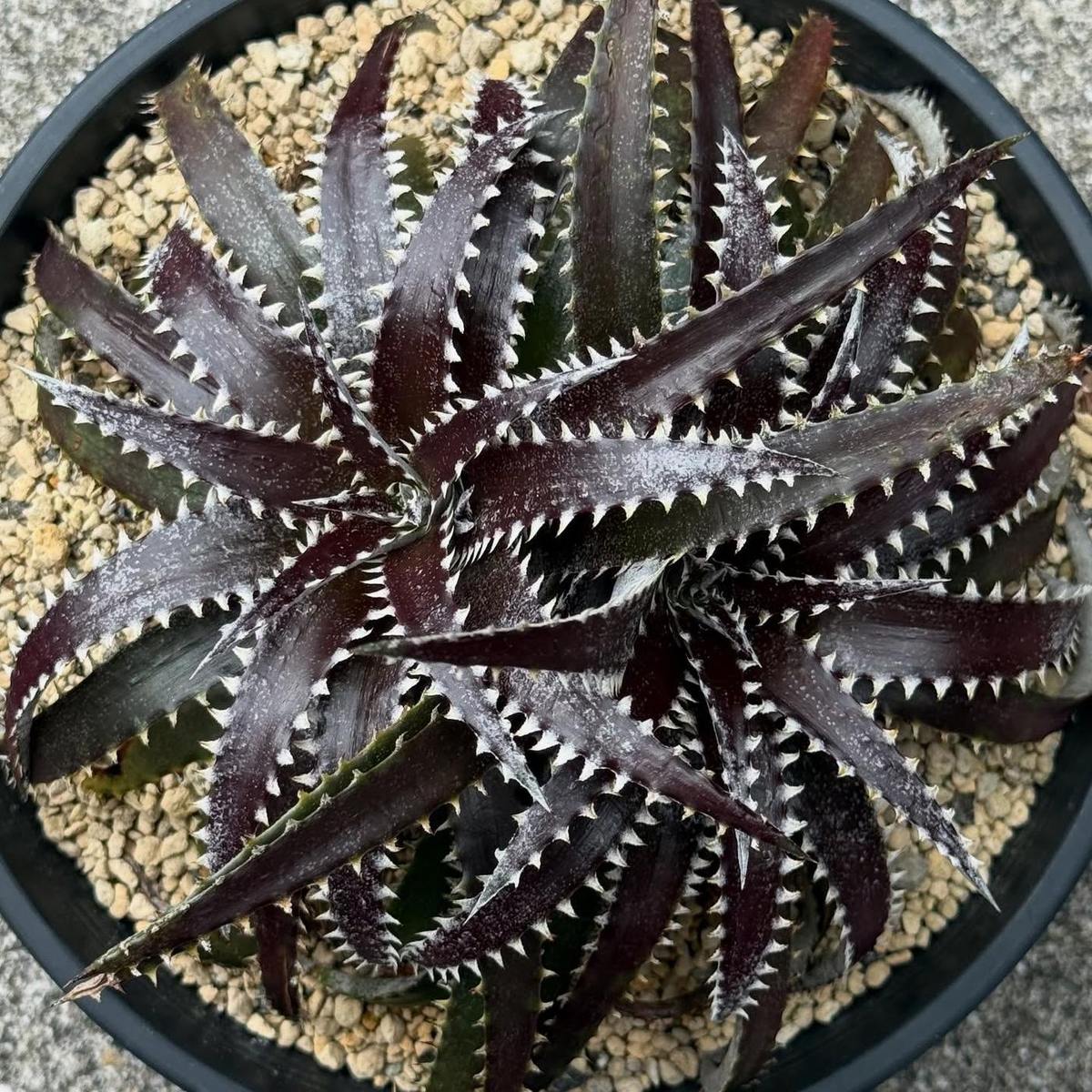 NOTES The American Roots of Dyckia Where the hybridising culture began — Bill Baker's ‘Brittle Star’ lineage, Bryan Chan, the Florida nurseries, and the flow on to Thailand and Japan.
-
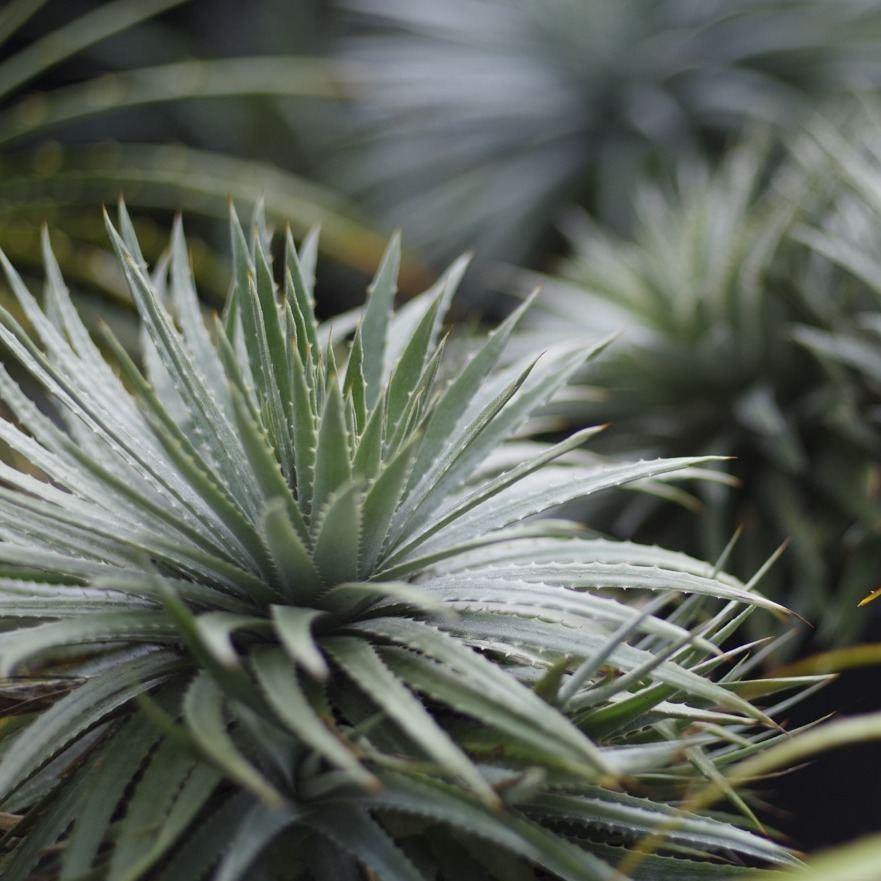 NOTES Brazil, the Homeland — and Dyckia Brazil The genus's homeland, and Constantino Gastaldi of Joinville — field observation, a hand in new-species descriptions, and a footprint in the BCR.
-
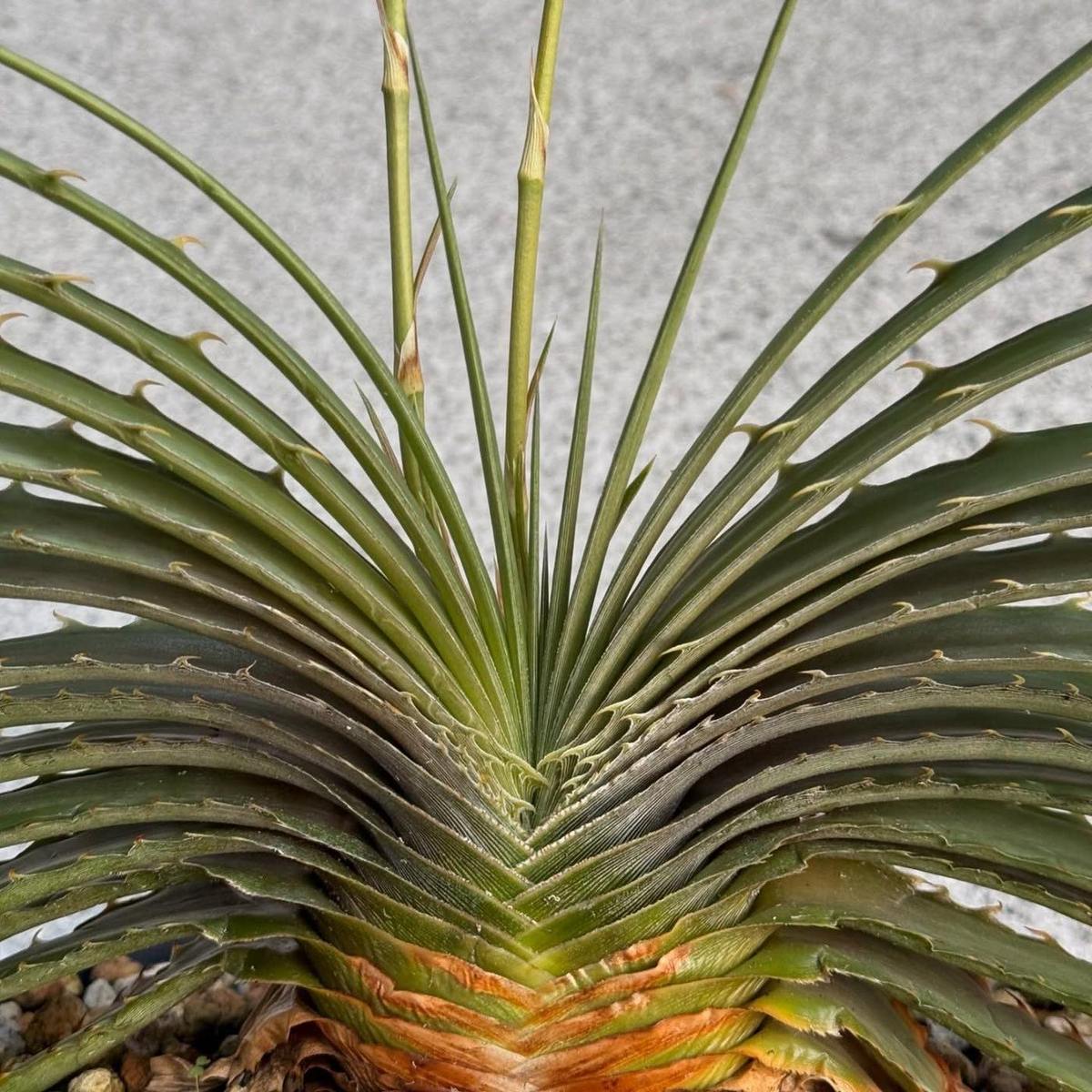 NOTES The Botanists Who Named the Species How to read author citations — Salm-Dyck, Mez, Smith, Reitz, the people of Les Cèdres, and the modern Brazilian describers.
-
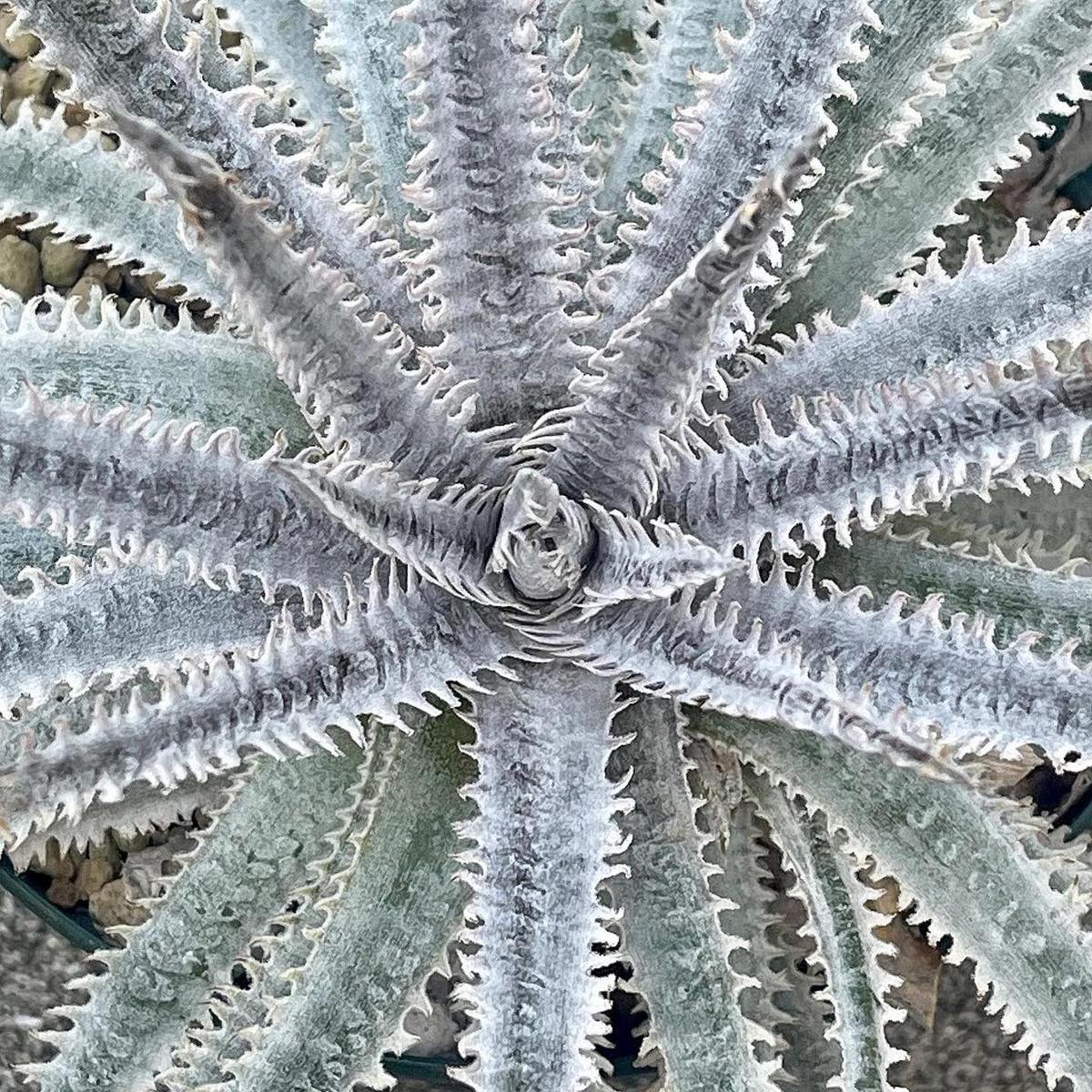 NOTES The Japanese Hobbyist Scene Thai imports, auctions, and plants and registrations moving between Japan and Thailand.
Researched: November 2026