
NOTES — RESEARCH NOTES
Basics & Morphology
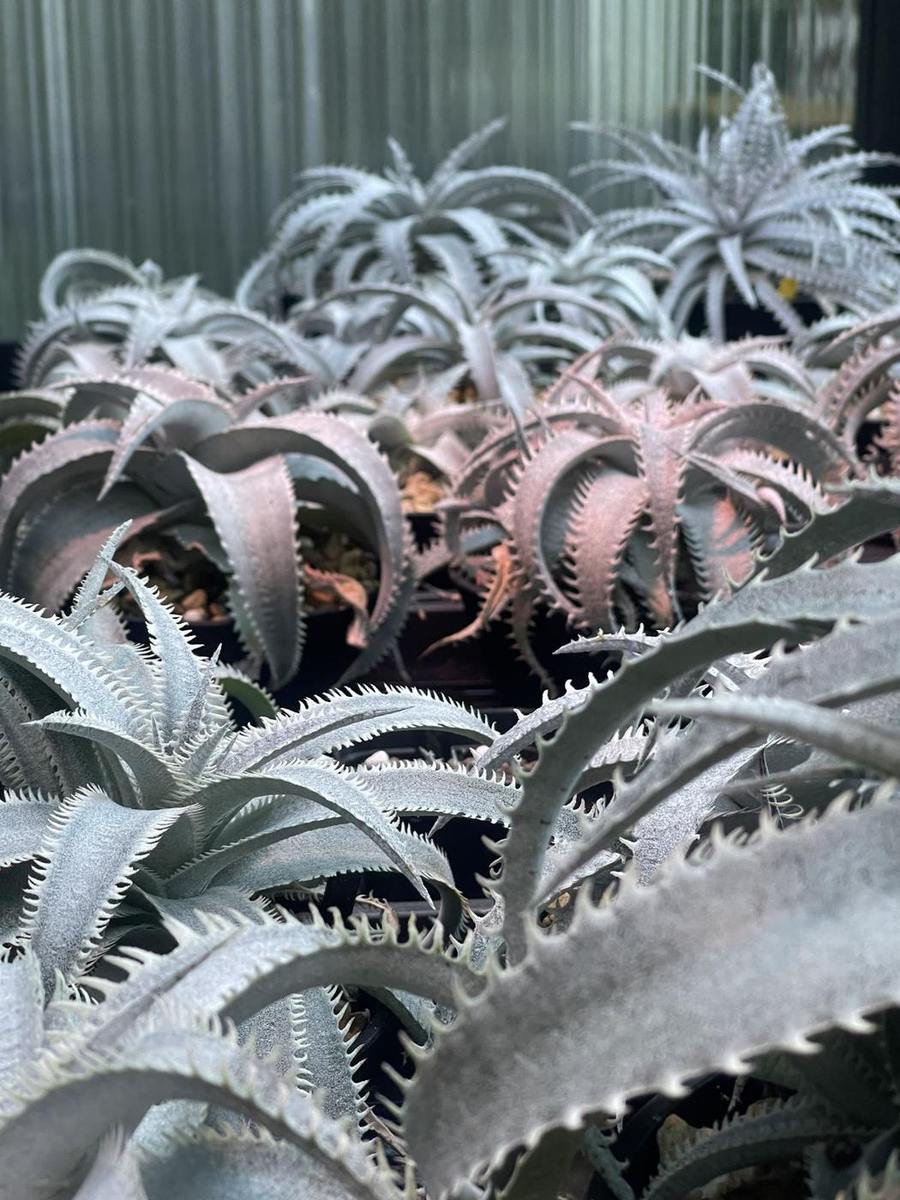
Dyckia is a genus of terrestrial and rock-dwelling rosette plants in the bromeliad family. Although it belongs to the same family as pineapples and tillandsias, it holds no water in a central tank. With stiff leaves, hooked spines, and a coat of silvery trichomes, it lives in strong sun among rocks — one of the family's most distinctive groups.
Classification & DistributionCLASSIFICATION
Family Bromeliaceae, subfamily Pitcairnioideae. The old, broad Pitcairnioideae has been recircumscribed in phylogenetic work, but Dyckia remains in the subfamily, in its narrowed sense, under the current eight-subfamily system. The genus is named for Prince Salm-Reifferscheidt-Dyck (1773–1861) of Prussia, a specialist in succulent plants.
The number of accepted species varies by source and by how the genus is counted, but recent expert lists put it at around 190 — 192 in Gouda & Butcher's continuously updated Bromeliaceae list — and new species are still being described. A newer treatment, following phylogenetic work, also folds the genus Encholirium (and part of Deuterocohnia) into Dyckia, which widens the count to about 220; whether to include them differs between databases and floras, and the framework itself is still moving. These notes therefore keep the figure as a range rather than a single settled number.
The centre of distribution is Brazil, which holds about 130 species — roughly seventy percent of the genus — of which 121 are counted as Brazilian endemics (Flora do Brasil 2020), extending into Paraguay, Argentina, Bolivia, and Uruguay. Typical habitats are highland rocky grasslands (campos rupestres), savanna (cerrado), and dry thorn forest (caatinga). The bedrock varies by region — quartzite, granite and gneiss, sandstone, ironstone (canga), basalt — and the soils over it are generally strongly acidic and nutrient-poor (see Brazil, the Homeland — and Dyckia Brazil). Most species are saxicolous (growing on rocks) or terrestrial, from sea level to about 2,000 m.
MorphologyMORPHOLOGY
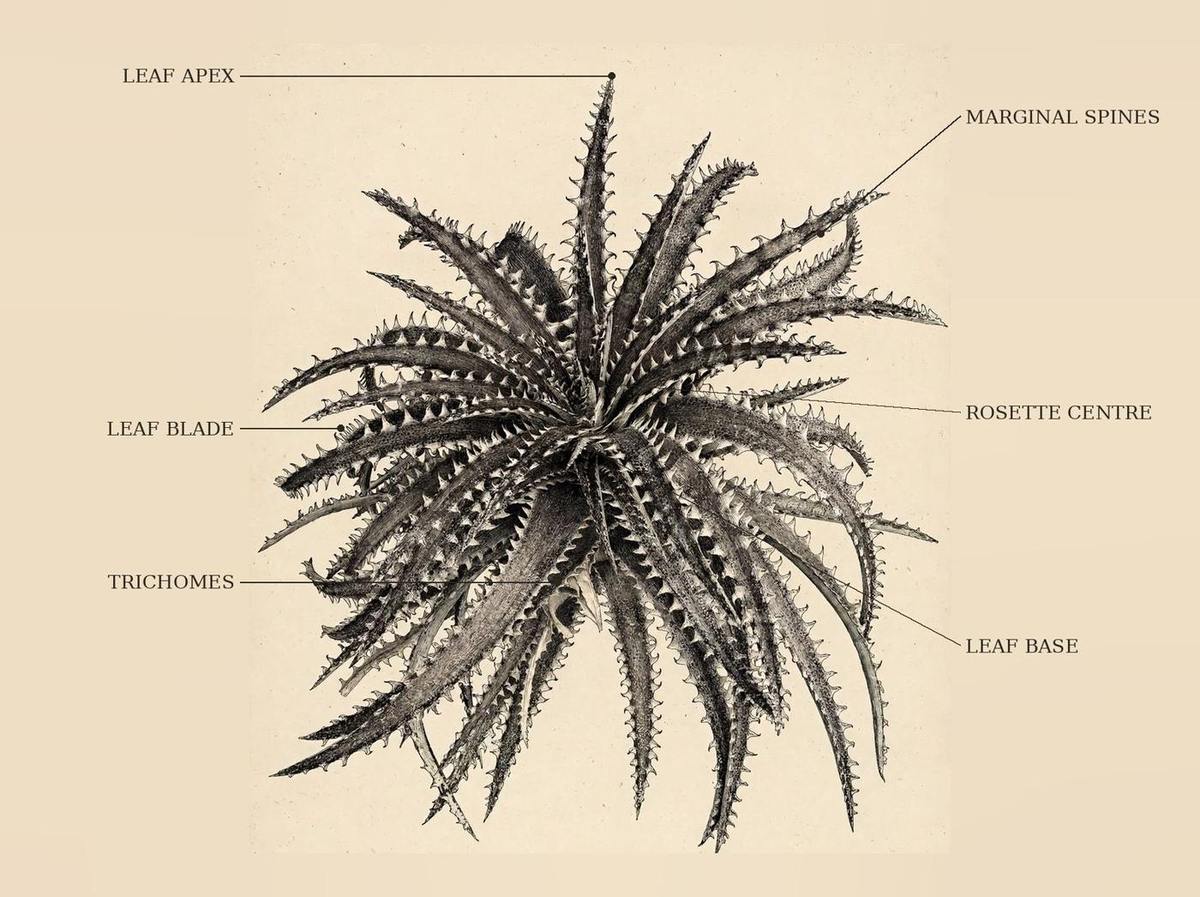
The leaves form a rosette, overlapping in a spiral from the centre. They are stiff, triangular to sword-shaped — broad at the base, narrowing to the tip — with hooked teeth (spines) set at regular intervals along the margins. The size, direction (toward the tip or toward the base), spacing, and colour of the spines are clues for telling species and cultivars apart.
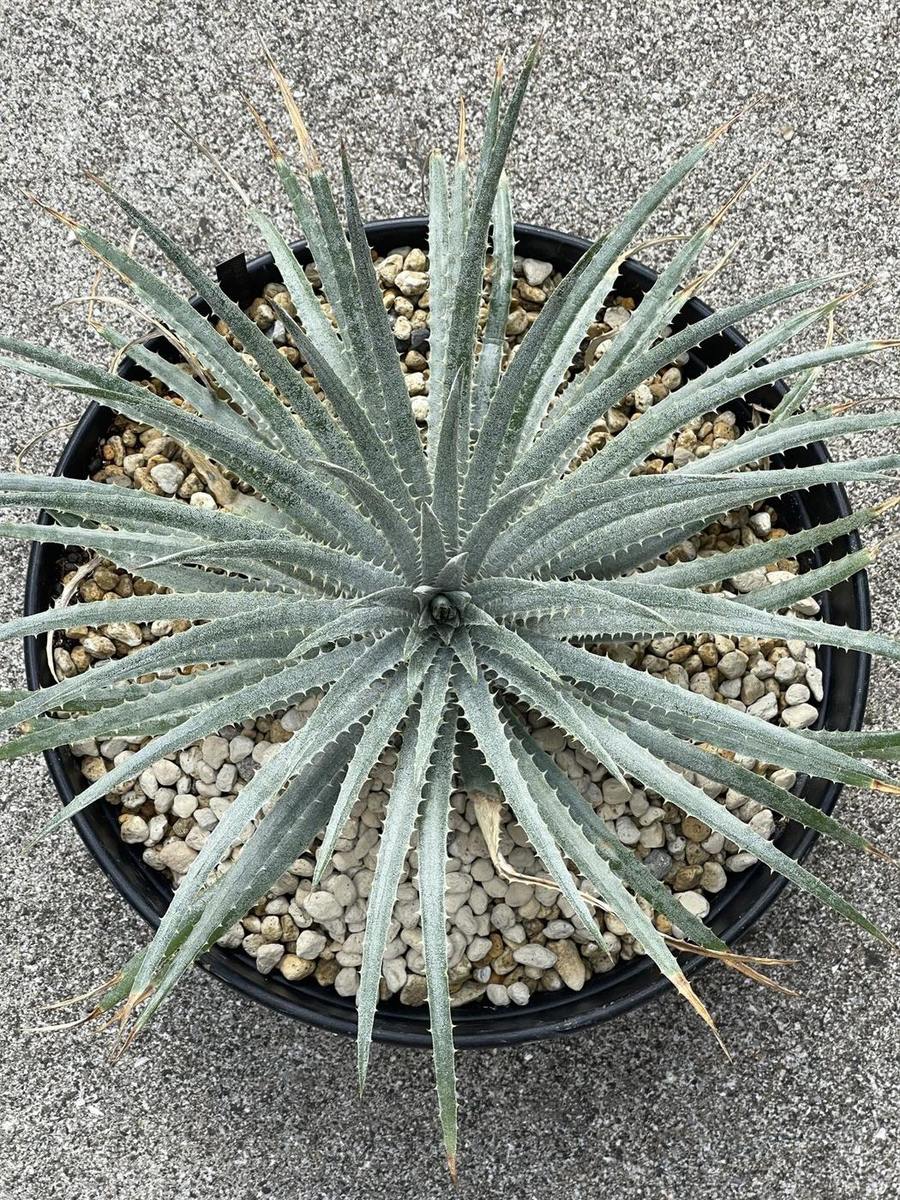
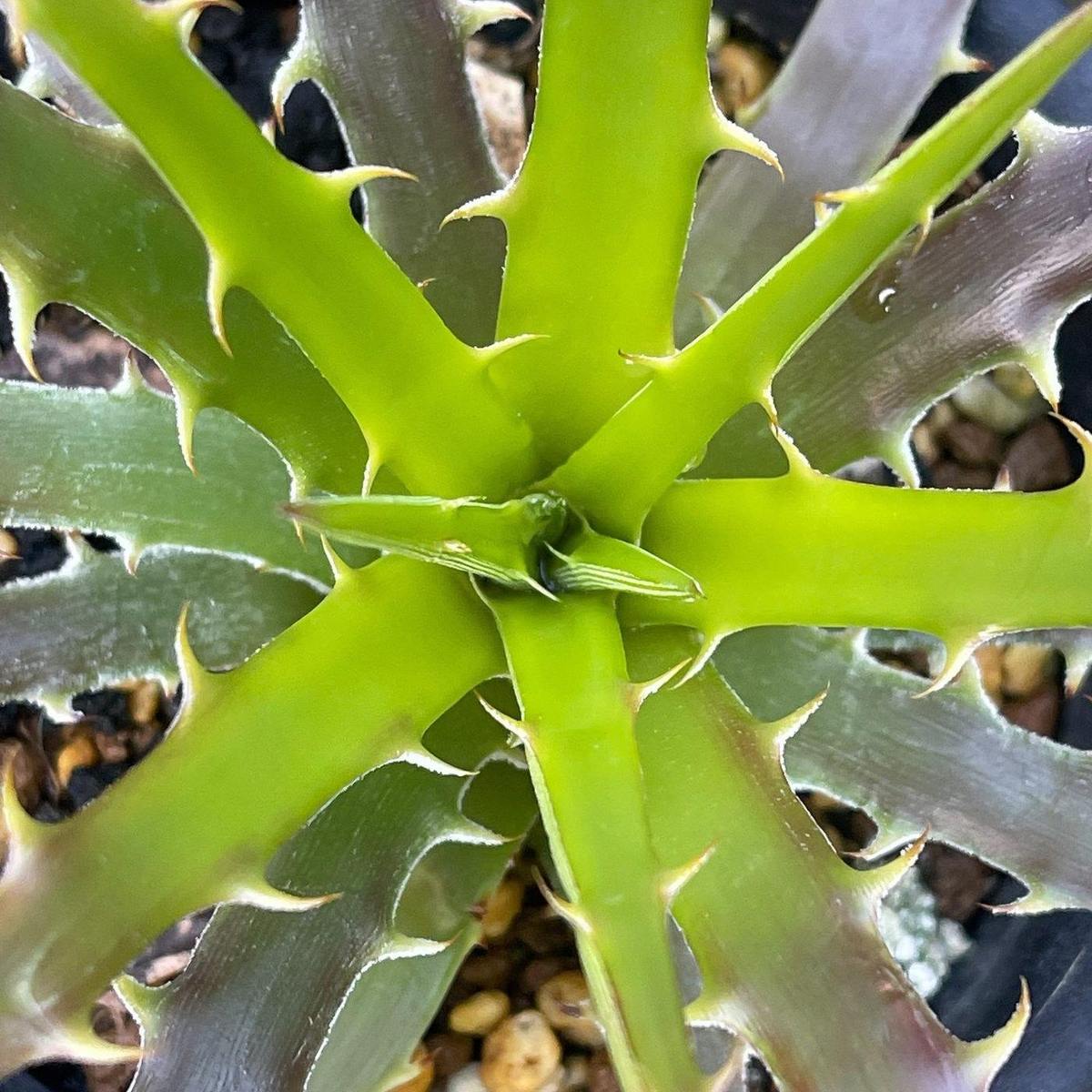
The leaf surface is covered in trichomes (peltate scales). In densely covered species the plant looks silvery white to almost pure white — but that is the colour of the trichomes, not of the leaf. The covering can rub off with handling or age, so the leaves are best not touched when watering (see Growing Dyckia). Whether the underside of the leaf is covered evenly in silver scales or marked with parallel lines is another key for separating close relatives.
The roots are thick and produced in quantity. Unlike the anchoring roots of epiphytic bromeliads, they are the main organ of water uptake — the reason these plants want a generous pot in cultivation.
Flowers & FruitFLOWERS & FRUIT
The inflorescence rises not from the centre of the rosette but from its side, out of a leaf axil. The flowers are usually bisexual and yellow to orange-red. Hummingbirds, bees, and butterflies are among the pollinators recorded.
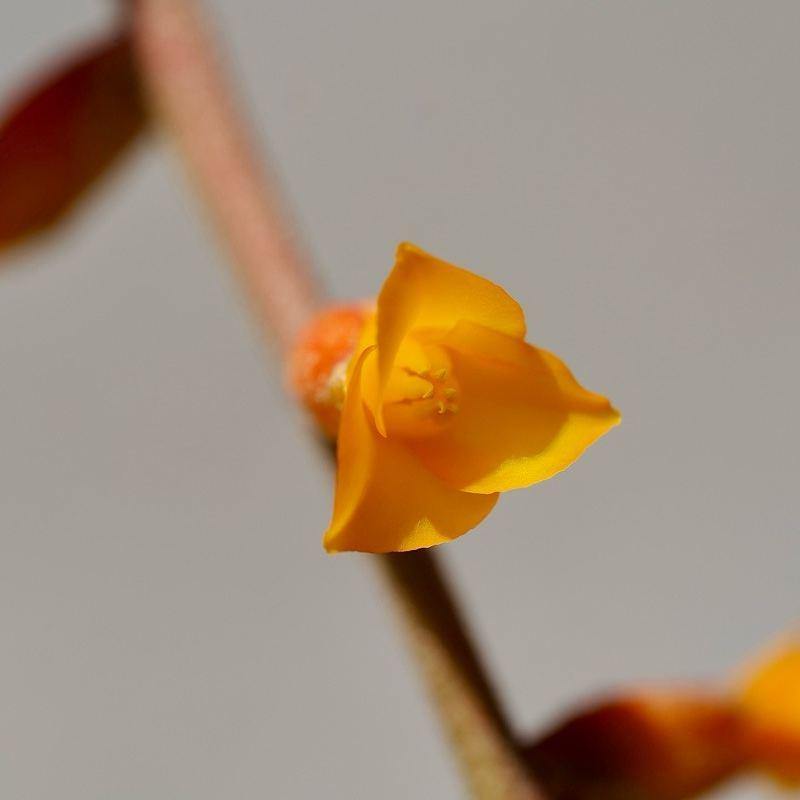
After flowering, the rosette does not die: it blooms again and produces offsets (it is not monocarpic). The fruit is a capsule that splits open to release small winged seeds carried by the wind. Some species have been shown in studies to germinate better in light, but the light requirement varies by species; in practice, seed is sown on the surface, uncovered.
How It DiffersDIFFERENCES
From tank-forming epiphytic bromeliads such as Neoregelia and Tillandsia, Dyckia differs in three fundamental ways: (1) it stores no water in a central cup, (2) water uptake is the roots' job, and (3) it is adapted to strong light on the ground and on rocks. Its cultivation follows from these three points.
The look-alike genus Hechtia, ranging from southern Texas through Mexico into Central America, has mostly white flowers (with rare exceptions in reddish and other colours) and is almost entirely dioecious (male and female plants are separate; the monoecious H. gayorum is the known exception). Dyckia, with bisexual flowers, is far easier to hybridise — the technical reason its hybridising culture has spread so widely.
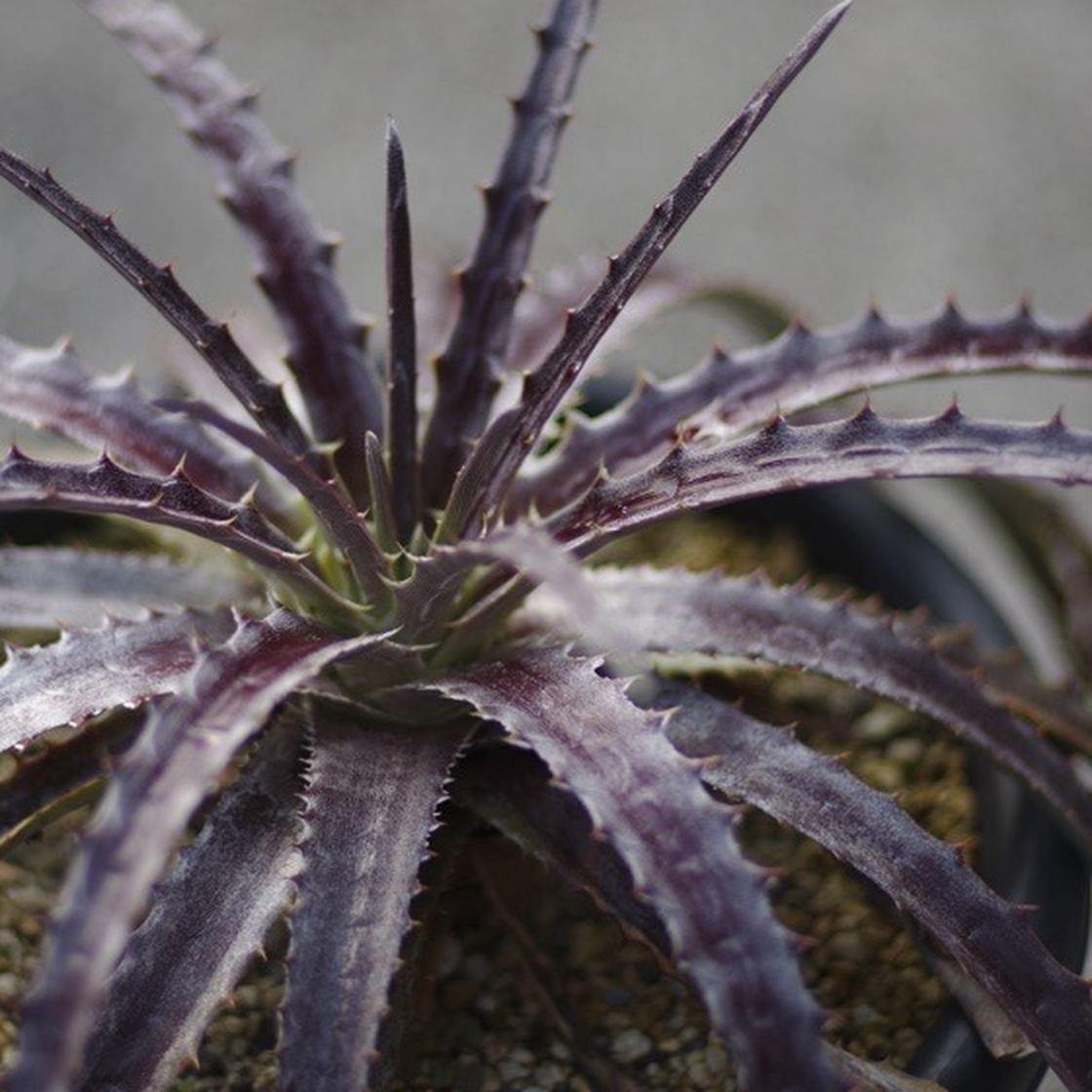
Agave resembles it in form but is not a bromeliad at all, and a flowering rosette dies (monocarpic). Dyckia, flowering from the side and living on, can be told apart on this point alone.
Researched: October 2026