
NOTES — RESEARCH NOTES
The American Roots of Dyckia
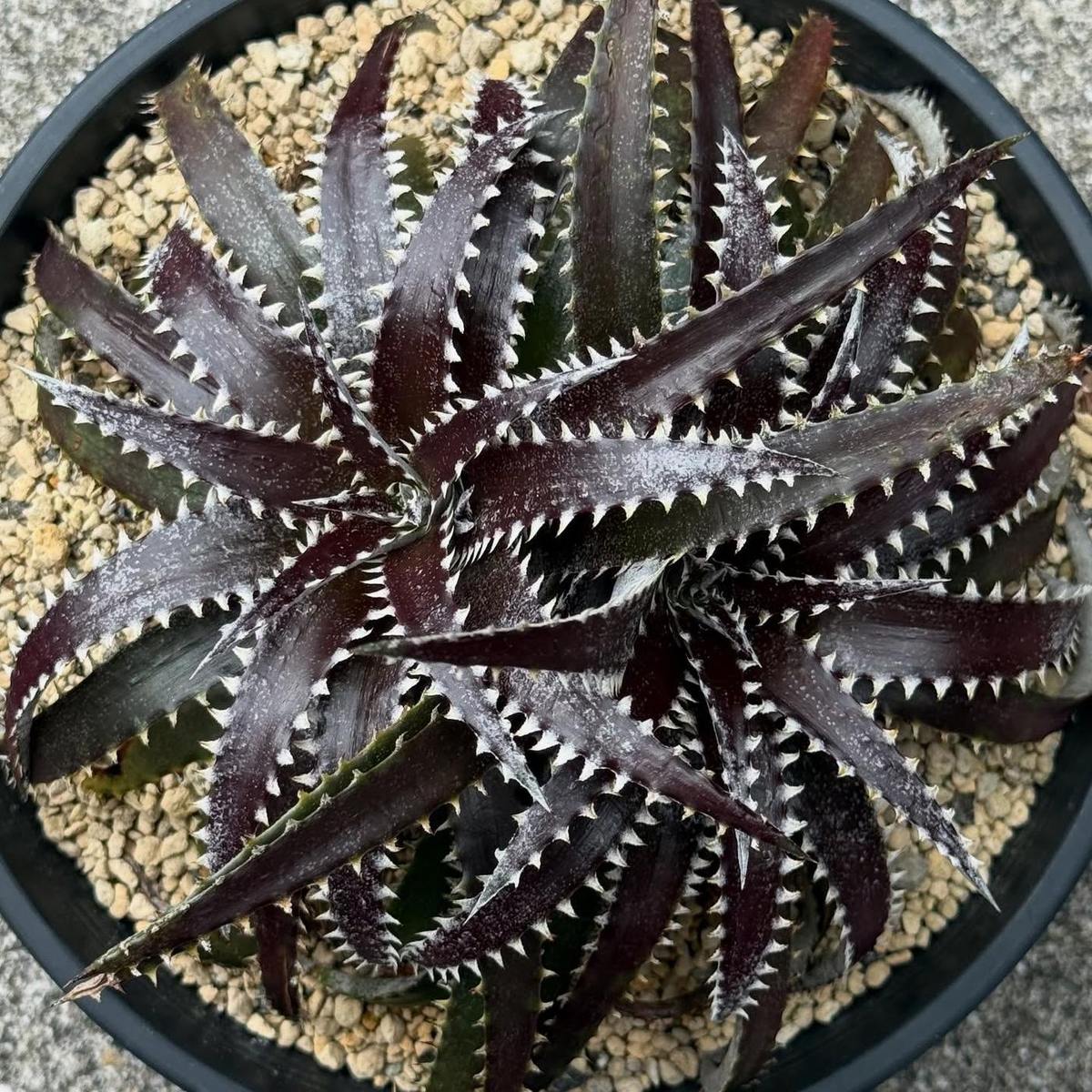
Dyckia comes from Brazil. But the culture of making cultivars — selecting and hybridising — grew up in the United States. Thailand may be where the hybridising is most intense today, yet much of the parent material and the lineages behind it spring from California and Florida.
Why AmericaWHY AMERICA
Dyckia has bisexual flowers and hybridises readily, a genus made for a crossing culture (see Basics & Morphology). America had, early on, all the other ingredients: bromeliad societies with their shows and records, nurseries that brought species back from collecting trips, and mail-order distribution across a continent. The surge of interest in the United States in the 1980s is sometimes called the "dyckia explosion", and Bill Baker is named as its central figure (a Ruth Bancroft Garden publication).
The raw material of crossing is selected individuals (clones) and seedling lines carried through generations. The clones and lines the American breeders made travelled out through nurseries and societies, and Thai breeders later took them up and advanced their generations. Trace the cross formulas used in Asia today, and they often end at a Californian name.
Bill BakerBILL BAKER
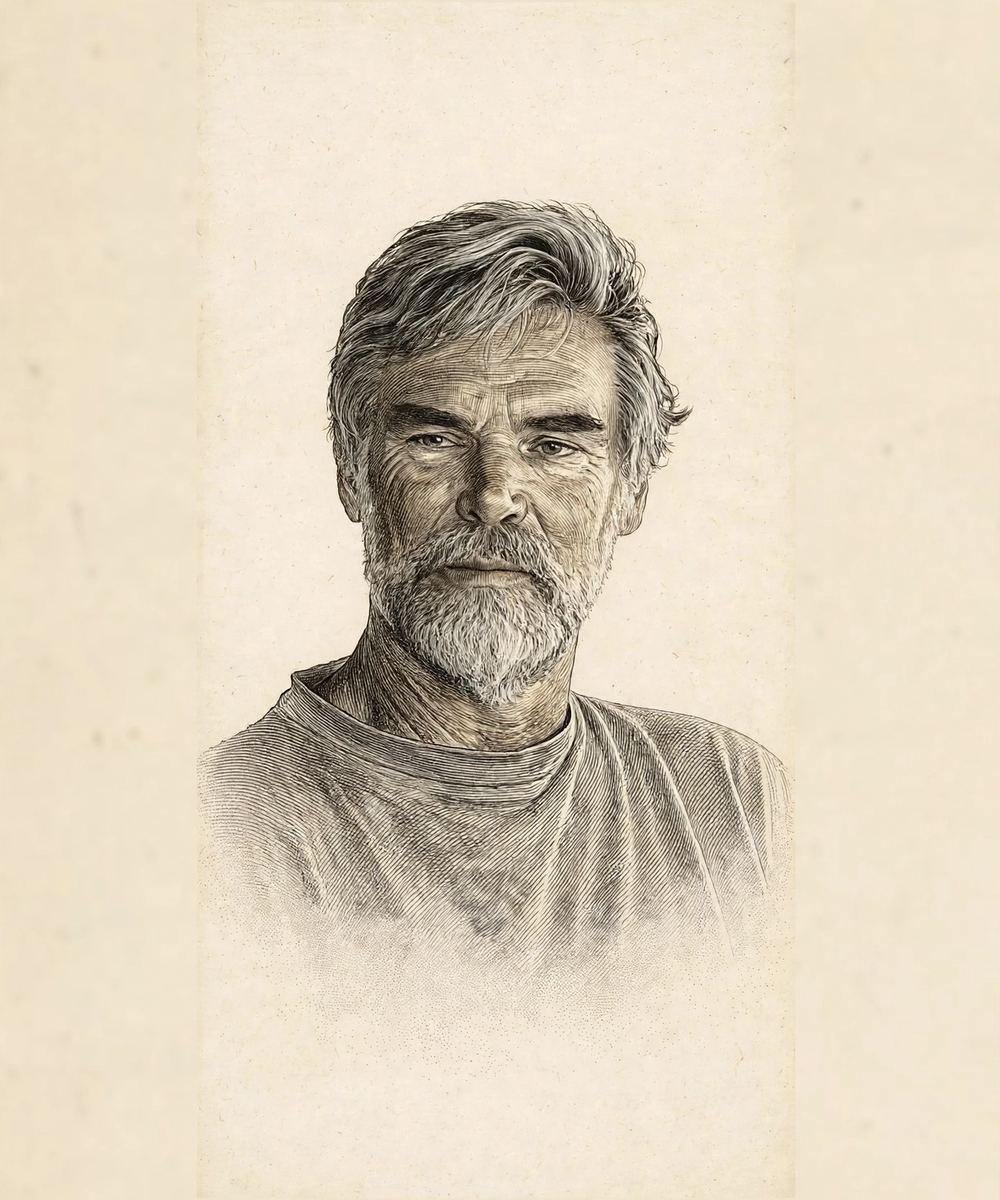
Bill Baker (died 2009) was a breeder who ran a nursery in Reseda, in California's San Fernando Valley. He was well known among cactus, succulent and bromeliad fanciers, and created many hybrids — dyckias above all — that are still widely grown today, years after his passing (research article at Succulents and More). His birth year is given differently by different sources: the Southern California Horticultural Society's award page and San Marcos Growers give 1947, while the Huntington's ISI (2022) and the Succulents and More research article give 1959. As we cannot settle it either way, this note records only the year of his death (2009; San Marcos Growers gives 11 April). He belonged to the circle of the San Fernando Valley Bromeliad Society; his plants were featured at Huntington Botanical Gardens plant sales, and some were distributed through the Huntington's International Succulent Introductions (ISI) programme (‘Ruby Snow’ appeared in the ISI catalogue; Southern California Horticultural Society newsletter).
The core of Baker's work was keeping species clones and advancing cross generations. The seed parent of ‘Brittle Star’ (next section), Dyckia dawsonii, was a storied plant grown at the Huntington; Baker and Dutch Vandervort are said to have been the two Californians who held offsets of it (research article by Derek Butcher, who himself presents this point as resting on anecdotal evidence). Never losing a fine species clone, and using it as the starting point of a cross — that stance became the foundation under everything that followed. This archive, too, holds a plant recorded as ‘dawsonii Bill Baker's Clone’.
The ‘Brittle Star’ LineageTHE 'BRITTLE STAR' LINEAGE
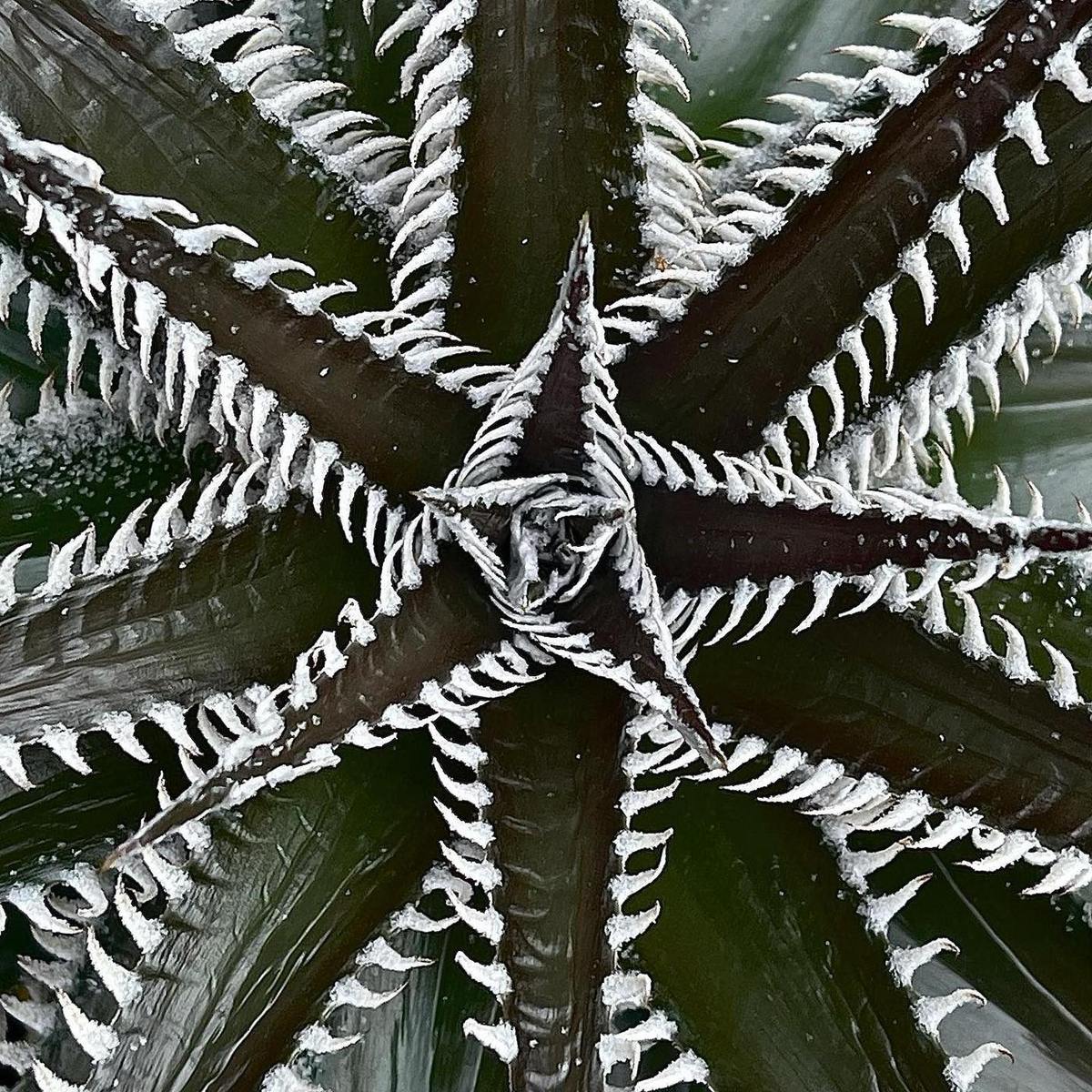
‘Brittle Star’ (BCR #2335) is the name of a seedling grex Baker raised from Dyckia dawsonii × (fosteriana × platyphylla). The cross is usually dated to the 1980s, following Derek Butcher's research article; the BCR itself records it only as made before 1998, of Californian origin, with Baker's own description: "Narrow red-burgundy leaves w/large white spines". Its grex sibling is ‘Morning Star’ — a relationship Bryan Chan reported to the register in 2012.
What matters is that ‘Brittle Star’ was not a one-generation cultivar but parent material, carried forward. Its seedlings advanced to F2 and F3, with selections made in many places. The plant photographed in the BCR entry is one Chanin Thorut of Thailand obtained directly from Baker. By the 2000s at the latest, Baker's material had reached Thailand. Q Dyckia's ‘Bone’ (a selection of ‘Brittle Star’ F3) and the "BS" abbreviation on Japanese labels both sit at the far end of this trunk (see Names & Cross Formulas).
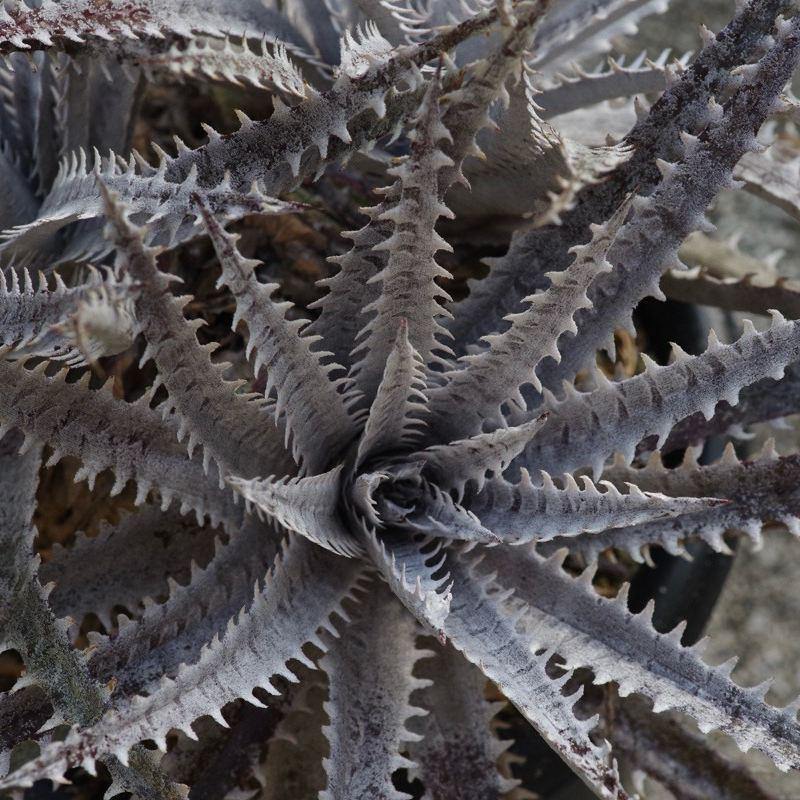
Because ‘Brittle Star’ is also a grex name, plants in circulation under it vary. Distinguishing a selected clone from the seedling grex is a basic rule of record-keeping in this archive.
Plants released after Baker's passing from the keeping of his wife Dana, said to be the original clone, have also reached Japan. Domestic records, passing on Chan's account, note that tags may have been switched during that period of keeping, so their authenticity is not settled.
Baker's CultivarsBAKER'S CULTIVARS
| ‘Warren’ | BCR #2394. Dyckia marnier-lapostollei × ‘Brittle Star’, made before 1998 and named to honour the hybridiser's father. The register describes it as having wide silver leaves with large white spines. Australian society writers have also pointed out the confusion that followed when seed-grown plants were distributed under the ‘Warren’ name — a standing warning that a name alone cannot authenticate an individual plant. |
|---|---|
| ‘Donna Marie’ | BCR #13549. Made jointly with Bryan Chan (2007, California) and named in honour of the breeder's wife. Before registration the plant was managed under the tracking code "FLL"; Chan handled its registration document (Reg. Doc.) in May 2016 (BCR). It is the DM of this archive's abbreviations. |
| ‘Heaven and Hell’ | BCR #10296. Made jointly with C. Nguyen (Baker–Nguyen, 2006). The formula, (‘Arizona’ × ‘Brittle Star’) × ‘Brittle Star’, is a backcross into ‘Brittle Star’ (BCR). |
| ‘Keswick’ | The BCR (#2358) records neither breeder nor parents — only that Baker showed the plant at the World Bromeliad Conference in San Francisco in 2000. Tropiflora introduced it as "of unknown parentage, thought to be the work of the late Dyckia aficionado Bill Baker" (that introduction could not be retrieved from Tropiflora's current site, so it is given here as their long-standing wording), and society sources suggest ‘Brittle Star’ as one parent, but the primary register does not confirm either point. |
| ‘Mercury’ | A selected clone that was never BCR-registered. The hybrid is Baker's; Tropiflora obtained ‘Brittle Star’ F2 seedlings from him and chose this one from among them to keep and propagate (Tropiflora's product description, verified in the product data published in 2023 and in archived copies). In Japanese circulation it has been treated as the "original clone". |
| Others | ‘Tarzana’ is named by Succulents and More's research article alongside ‘Brittle Star’ as one of Baker's notable hybrids. ‘Cherry Coke’ is credited to Baker by Gardeners' Path, but its parentage has no primary registration. |
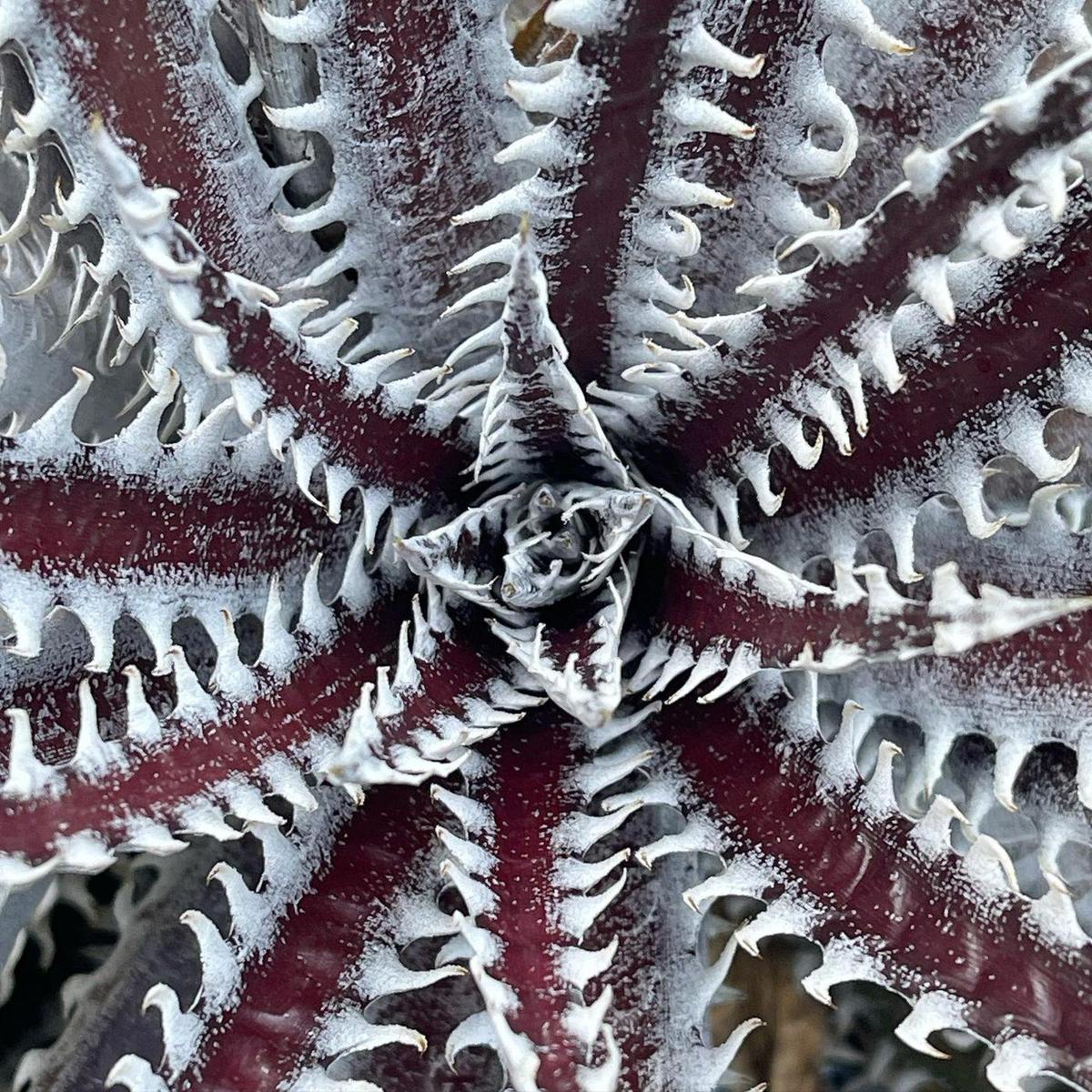
Baker's influence lies less in the count of his cultivars than in the method itself — hold species clones, advance the generations, keep selecting — which spread from his circle to other countries. If this archive calls him a "father of Dyckia", it is because, in its reading, he built both the lineages and the method.
Bryan ChanBRYAN CHAN
Bryan Chan is a Californian breeder from the same San Fernando Valley society circle as Baker. A member of several Los Angeles-area bromeliad clubs since the late 1980s, he served as president of the San Fernando Valley Bromeliad Society (society newsletters, 2018–2019). He is not only the co-breeder of ‘Donna Marie’; he is the person who kept recording Baker's grexes.
After Baker's passing, Chan's name recurs throughout the register's Baker-related records: the note in ‘Brittle Star’ (#2335) reporting its sibling relationship to ‘Morning Star’ (2012), the Reg. Doc. for ‘Donna Marie’ (#13549, 2016), and he was the registration documenter (Reg. Doc.) for ‘Morning Star’ (#11461, 2012) and ‘Arizona’ (#12764, 2015). The BCR also preserves the fact that ‘Donna Marie’ was managed, before registration, under the alphabetic tracking code "FLL". Managing seedlings and grexes under codes, then giving names only to selected individuals and registering them — Chan's record-keeping kept Baker's lineages in a form that can still be verified.
The plants Chan managed can also be traced in domestic circulation records. Among the code-to-name matches are FAA = ‘Big Brother’, FOO = ‘Uncle Ray’, and FSS = ‘Aunti Vi’. One cross whose formula survives is CFF, a cross of ‘Arizona’ with the ‘Brittle Star’ line made in 2006; the members of its group known to survive are CFF and ‘Snowstorm’ (CAA). ‘Tarzan’ and ‘Tarzana’ circulate under different names, but on Chan's account they are separate plants from the same seedling grex.
He also exhibited: a Dyckia ‘Uncle Ray’ shown by Chan is said to have won best in its class at the World Bromeliad Conference in San Diego (reported second-hand in a hobbyist's blog).
Florida NurseriesFLORIDA NURSERIES
One of the doors through which Californian crosses reached the world was Florida's nursery trade.
Michael's Bromeliads (Venice, Florida; Michael Kiehl) began over thirty years ago as mail order from a back yard in St. Petersburg, then moved to Venice in 2000 after taking over the nursery and land of the retiring Don Beadle. It grew to fourteen greenhouses with a retail shop, "Donna's Secret Garden" (the business's own account). Beadle was the editor of the 1998 Bromeliad Cultivar Register, and the nursery remains the depository of his collection (Florida Council of Bromeliad Societies newsletter, 2015). Dyckia was among the genera certified for interstate shipment (Florida FDACS nematode certification), and customers remembered it for species "that no one else anywhere had". Kiehl himself kept exhibiting at shows: his intergeneric ×Dycklirium ‘Megalodon’ was named Best Multiple Bromeliad at the Caloosahatchee show in December 2019 (FCBS newsletter, 2020). After Hurricane Ian in 2022 it closed to the public, and a customer reports that it closed in May 2023; the business was later taken over by David Sand (Sarasota Bromeliad Society records).
Tropiflora (Sarasota, Florida; Dennis & Linda Cathcart; established 1976) was one of America's largest collector nurseries. The Cathcarts are said to have made more than one hundred collecting trips (their destinations are sometimes given as twenty-seven countries), and the nursery held some 4,000 varieties of bromeliads and an inventory of over a million plants (the variety and inventory figures are from the FCBS nursery directory). Its colour catalogue-cum-newsletter, the Cargo Report, published several times a year, was the window through which hobbyists worldwide learned of new species and hybrids. A Florida society newsletter reports that their 2014 expedition to Brazil was mounted expressly for Dyckia and terrestrial bromeliads, bringing species in year after year. American hybrids — Baker-line material among them — also moved through the Cargo Report: a buyer's record shows a cross with ‘Brittle Star’ F2 as a parent and a ‘Mercury’ cross (reitzii var. rubra × ‘Mercury’) listed in the January 2007 issue (GardenWeb). Tropiflora is also known for supplying thousands of plants to Singapore's Gardens by the Bay.
In 2026, after fifty years, Tropiflora announced a change of ownership, with the nursery open through the end of October 2026 (Tropiflora's website). A place that sat at the centre of the world's bromeliad trade for half a century is turning a page.
On to Thailand & JapanON TO THAILAND & JAPAN
The American lines reached Thailand through the nursery and society network. That the ‘Brittle Star’ photographed in the BCR is a plant Chanin Thorut obtained directly from Baker is primary evidence of how early that flow began. Thai breeders advanced the ‘Brittle Star’ generations and selected from them (such as ‘Bone’, a selection of ‘Brittle Star’ F3), and in time both plants and notation reached Japan (see The Japanese Hobbyist Scene).
That Thai hybridising thrives today is beyond doubt. But follow the trunk back, and it ends at Brazilian species and at selection and crossing work done in California. Many of the cross formulas this archive records in Kochi sit at the far end of that lineage.
SourcesSOURCES
Bromeliad Cultivar Register (BSI): ‘Brittle Star’ #2335, ‘Warren’ #2394, ‘Donna Marie’ #13549, ‘Heaven and Hell’ #10296, ‘Keswick’ #2358 (registry.bsi.org). Derek Butcher, "Dyckia ‘Rabbit Warren Group’" (Bromeliads in Australia). Succulents and More, "The story of Hercules" (2024). Southern California Horticultural Society award page and newsletter (October 2021). San Marcos Growers (source for Baker's death date). Huntington International Succulent Introductions (2022). San Fernando Valley Bromeliad Society newsletters (2018–2019). Gardeners' Path, "How to Grow Dyckia". A Growing Obsession (the ‘Uncle Ray’ exhibit). Florida Council of Bromeliad Societies newsletters (2011, 2013, 2014, 2015, 2020). Florida FDACS nematode certification list (Michael's Bromeliads, Inc.). Dave's Garden business reviews (Michael's Bromeliads / Tropiflora). A buyer's Cargo Report record on GardenWeb (2007). Tropiflora's website (tropiflora.com).
Researched: October 2026