
NOTES — RESEARCH NOTES
Growing Dyckia
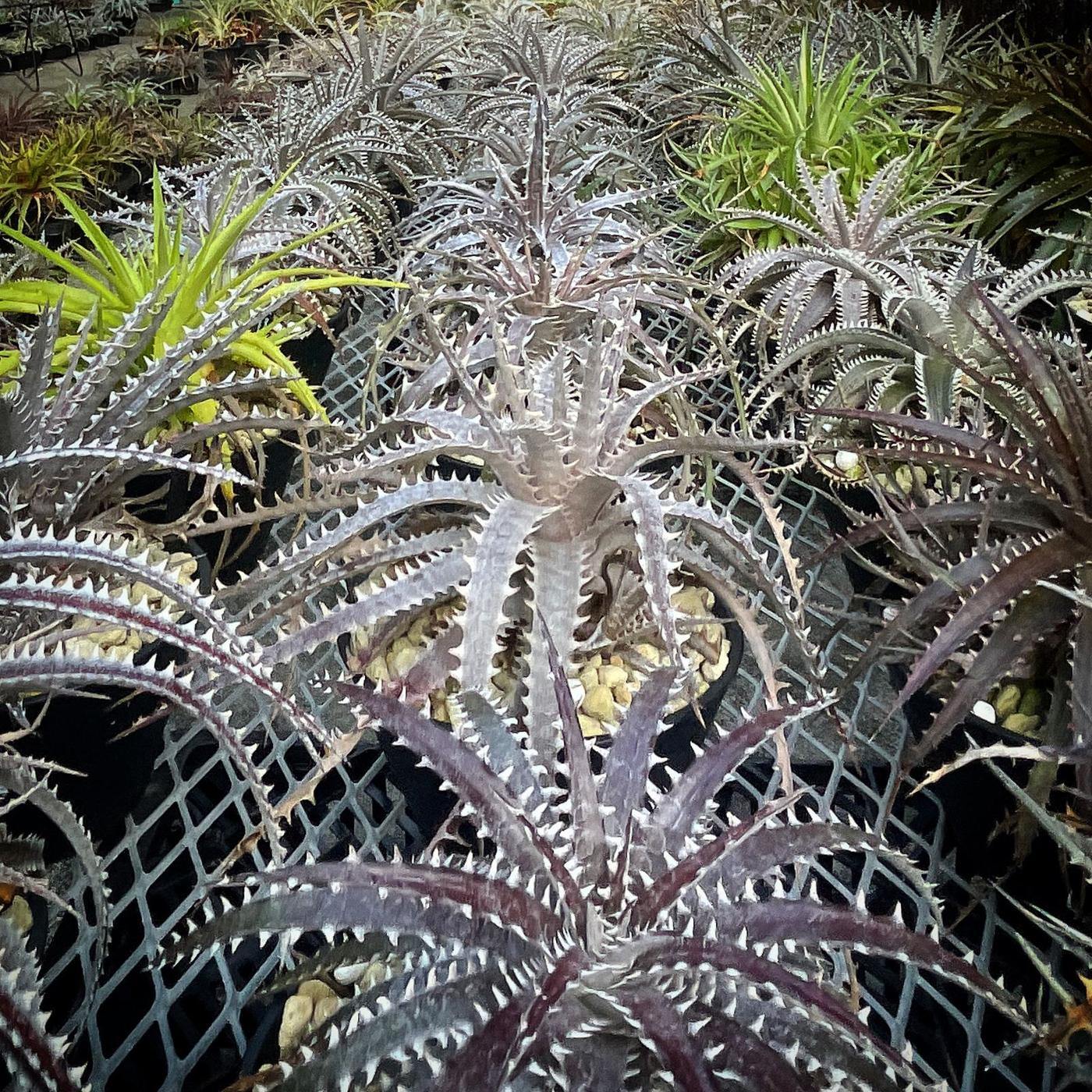
The most common misunderstanding in Dyckia cultivation is that it should be kept dry, like a cactus or a succulent. It endures drought by resting — but in the growing season it is a plant that loves water. In a hot, humid, rainy climate like Kochi's, the key is living with a seemingly contradictory nature: fond of water, yet weak against stagnant wet air.
TopicsTOPICS
- Light Strong light is the baseline. Too little and the plant stretches, and the reds, purples, and blacks of its colouring fade, and the silver dulls.
- Water In the growing season, water generously once the surface of the mix has dried; in the winter rest, keep it on the dry side. Withholding water altogether stops growth and invites leaf-tip dieback and root loss. Our line on bottom watering is here, too.
- Soil & Pots Growers disagree about the mix; the one premise every position shares is that water must not stagnate around the roots. Fertiliser strength, NPK, and pH divide the sources, too.
- Crossing & Sowing Our practice of logging every cross by year, seed parent, and pollen parent — and the whole sequence, from emasculation and pollination to seed harvest and light-loving sowing.
- Heat and Cold Among the hardier bromeliads as a genus — but tolerance varies greatly by species, and freezing while wet is the state to avoid most.
- Airflow More than humidity itself, it is the combination of heat, still air, and staying wet that causes rot.
The Changing EnvironmentTHE CHANGING ENVIRONMENT
We began growing Dyckia in earnest in 2020. This section looks back at how Kochi's weather has moved since then, using the Japan Meteorological Agency's observations at the Kochi station. The station stands in Kochi City, a few kilometres from our field and garden, and the microclimate — sun, wind, cold-air drainage — is not the same. Read these numbers as "the air of that year in Kochi", not as measurements of our benches. Seven years is also too short a span to settle any claim about climate change.
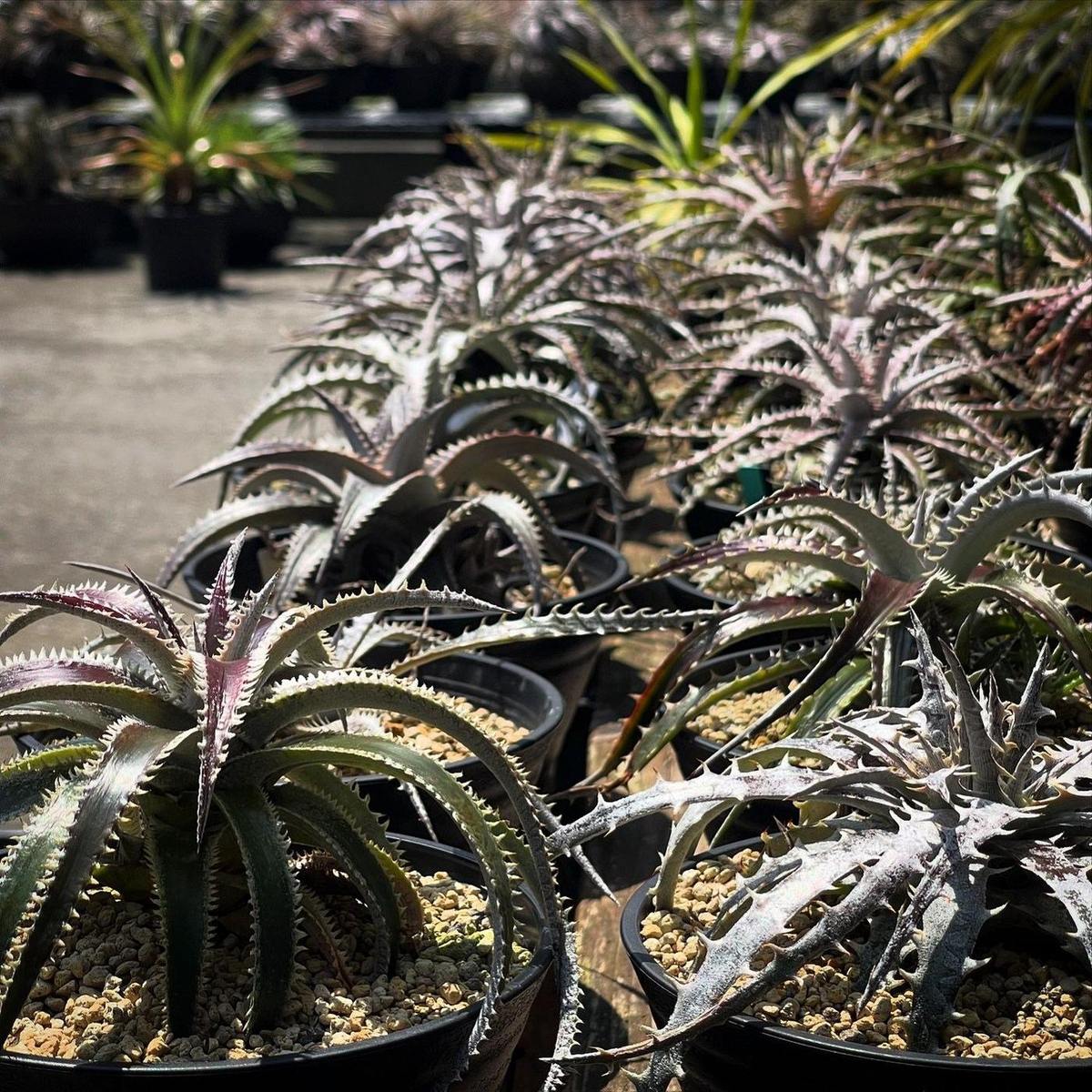
The shape of summer heat differs by year. Months with a mean temperature of 28 °C or more numbered one each in 2020, 2022 and 2023, but two each in 2024, 2025 and 2026 — in recent years the hot months come in pairs. Days reaching 35 °C or above (the JMA's "fiercely hot days") were strikingly frequent in 2024 (19 days) and 2026 (16), and strikingly rare in 2021 and 2023 (one day each). The 2023 maximum, 37.3 °C, fell on 4 September — a year whose only fiercely hot day arrived in early autumn. The highest temperature of the whole period is 38.1 °C, on 2 August 2026.

Kochi's rainfall is heavy even by national standards. The station normal (1991–2020) is 2,666.4 mm a year, roughly 1.6 times the national average of about 1,718 mm (Ministry of Land, Infrastructure, Transport and Tourism). That our plot is well-drained land is part of what makes growing under this much rain possible. Rainfall swings just as widely. The wettest month was July 2020 with 951.5 mm, and the June–July total for 2020, 1,392.0 mm, stands apart from every other year. At the other extreme, two months recorded no rain at all (December 2024 and January 2026, both 0.0 mm). June 2026 brought 620.5 mm of rain with only 91.6 hours of sunshine. Humidity stays high all year; even in the driest winter months the mean relative humidity is 56–67%.
| Year | Days ≥35 °C | Highest (°C) | Lowest (°C) | Annual precip. (mm) | Jun–Jul precip. (mm) |
|---|---|---|---|---|---|
| 2020 | 8 | 37.8 (16 Aug) | −1.0 | 3,238.5 | 1,392.0 |
| 2021 | 1 | 36.4 (27 Jul) | −4.5 | 3,121.0 | 577.5 |
| 2022 | 3 | 35.8 (4 Aug) | −3.5 | 2,025.5 | 858.5 |
| 2023 | 1 | 37.3 (4 Sep) | −3.9 | 2,783.0 | 587.5 |
| 2024 | 19 | 37.7 (30 Jul) | −2.9 | 2,577.0 | 590.0 |
| 2025 | 6 | 36.4 (2 Aug) | −2.5 | 2,142.5 | 637.0 |
| 2026 | 16 | 38.1 (2 Aug) | −2.9 | 2,532.5 | 797.5 |

Winter cold also varies. Taking each winter as December to February, the lowest temperature was −4.5 °C in the winter of 2020–21 (January 2021); the other winters ranged from −1.6 to −3.9 °C. Kochi's winters are mild, but below-freezing days arrive almost every year. Annual precipitation runs from 2,025.5 mm in the driest year (2022) to 3,238.5 mm in the wettest (2020) — a spread of more than 1,000 mm.
Set side by side, the records and the numbers overlap in a few places. Every winter in which a cold-damage record appears (numbers 1, 4 and 5) was a winter whose minimum reached −2.5 °C or below (−3.9 °C in 2022–23, −2.5 °C in 2024–25, −2.9 °C in 2025–26). Numbers 1 and 5 were reported at winter's end or in early spring; number 4 was written in mid-winter, as a thing that happens every year. Both sunburn records (numbers 2 and 5) fall in March — the season when leaves accustomed to weak winter light meet spring sun that strengthens suddenly. That reading is our inference, offered as such.
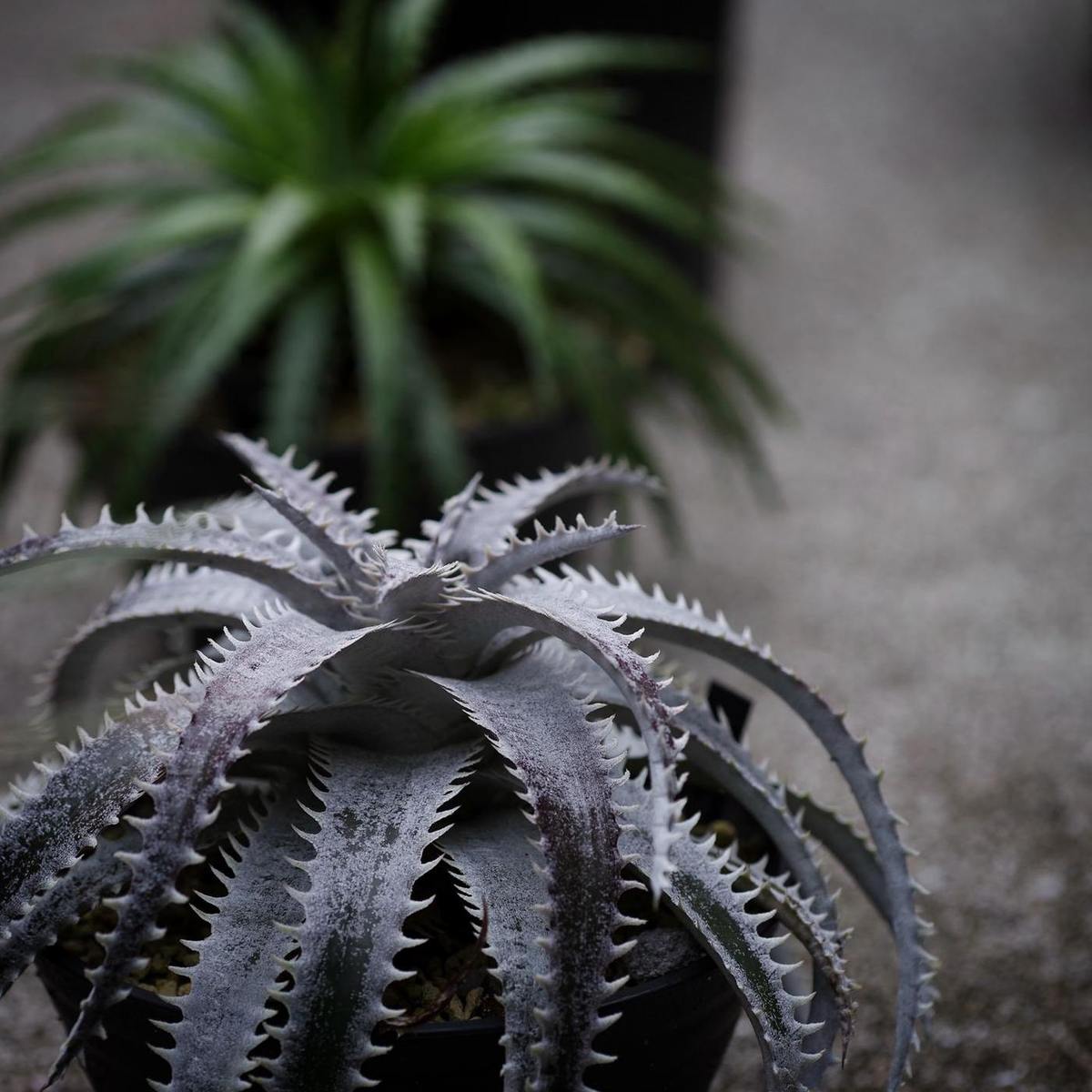
Number 6, the trichome stripping, was recorded in the month after June 2026 — at 620.5 mm the second-wettest month of the whole period. It matches, in figures as well as in observation, what we have recorded elsewhere: past a certain amount of rain, the trichomes come off (see "Trichomes"). Flowering records concentrate in April–May every year, and winter crossing depends on plants that have flowered in the preceding winter.
In 2023, in the middle of a severe cold wave, we brought the flowering plants indoors and began crossing. In 2026 we had planned to start the crossing work in late January, but the cold delayed flowering and the actual start was 21 February — a later crossing season than usual. That January, as we remember it, was a dry month with 0.0 mm of rain and a minimum temperature of −2.9 °C.
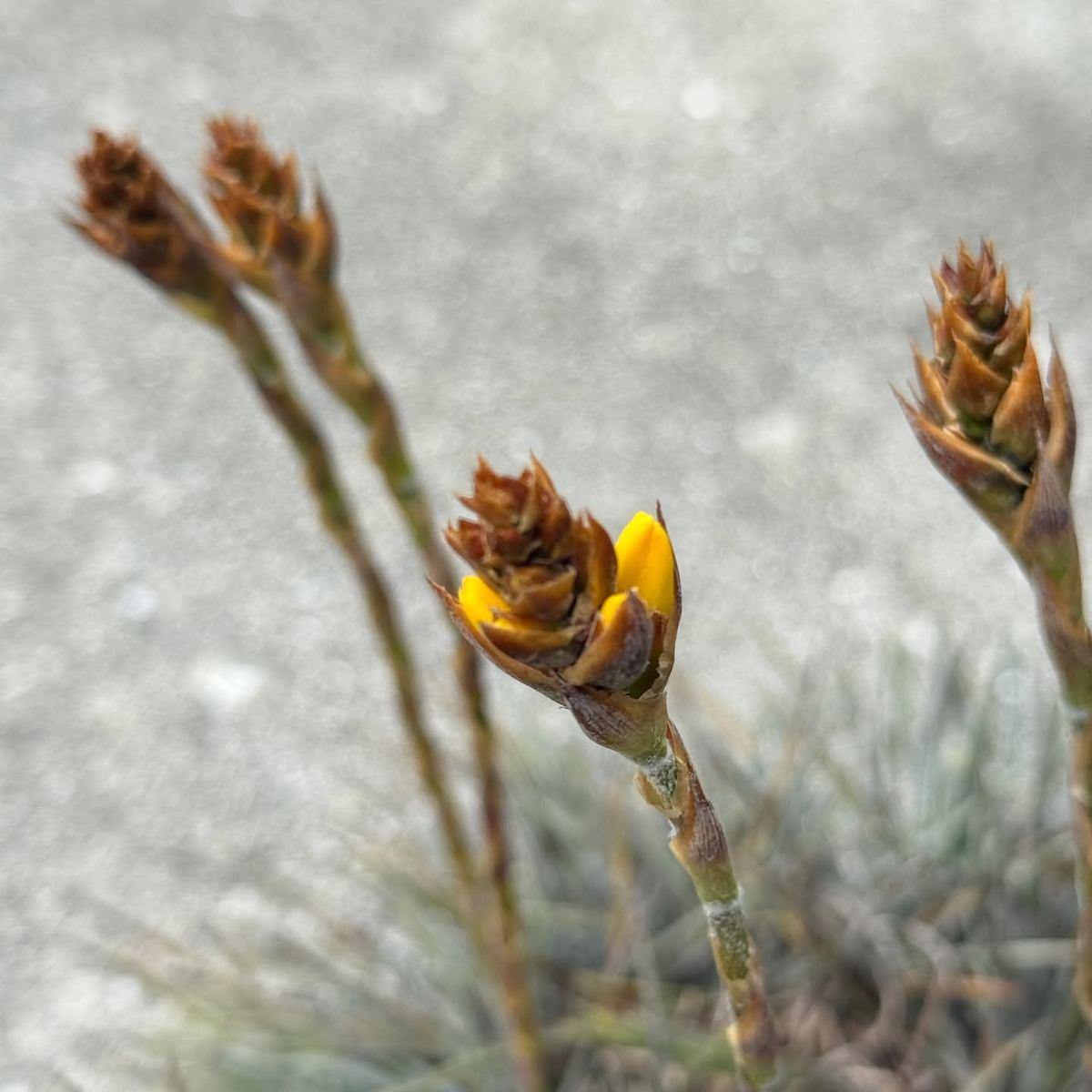
The two records do not always line up simply. 2025 has the most flowering records of any year (17), and we have the impression that the buds were the most numerous ever, perhaps because the winter was warm (see "Flowering Records"). At the station, though, that winter was mixed: December 2024 was comparatively warm (mean 8.2 °C) and completely dry (0.0 mm), while February 2025 was the coldest February of the seven years (mean 5.7 °C). It was not a uniformly warm winter, and we do not lay the flowering down to temperature alone; the microclimate of the growing sites and the plants' own maturity are both likely involved, but we cannot separate them in any detail.
Keeping the plants' records and the weather's records on the same calendar, year after year, is the basis of this archive. The numbers are the station's; the observations are ours. The overlaps that only appear when the two are set side by side are what we will keep checking, year by year.
A Year in KochiA YEAR IN KOCHI
A management guide that applies overseas specialist sources and Japanese practice to Kochi's climate — hot humid summers, a rainy season, typhoons, and mild winters with occasional frost.
| Spring (Mar–May) | The season for repotting and dividing offsets. Harden plants off to strong light outdoors in stages, and resume water and weak feed as growth begins. |
|---|---|
| Rainy season (Jun–Jul) | The plants want water, but windless, saturated air is the greatest enemy. Prefer pots that can be moved under cover, into bright shelter, during long rain. |
| High summer (Jul–Sep) | Water in the morning to prevent drying out. Where afternoon sun is too fierce, use shade to protect leaf tips while keeping the light the colour needs. Before typhoons, gather large, spiny pots low and stable so they cannot fall. |
| Autumn (Oct–Nov) | Strong light brings the best colour of the year. Reduce water gradually to firm the plants up. A good season for sowing and for tidying cross records. |
| Winter (Dec–Feb) | Winter dry is the rule. On frost-forecast nights, move plants under cover or indoors. Protect tender species early, and for hardy ones, avoid only one thing: freezing while wet. |
* This calendar is a synthesis — facts from several sources fitted to Kochi's climate — not the guidance of any single source.
Researched: October 2026