
NOTES — RESEARCH NOTES
Classical Botanical Plates
Botanical plates of Dyckia species from nineteenth-century publications. Before photography, plates like these were how the appearance of a plant from a distant homeland reached botanists and growers.
*All are in the public domain, their copyright having long expired
Dyckia frigida Hook.f.CURTIS'S BOTANICAL MAGAZINE, 1877
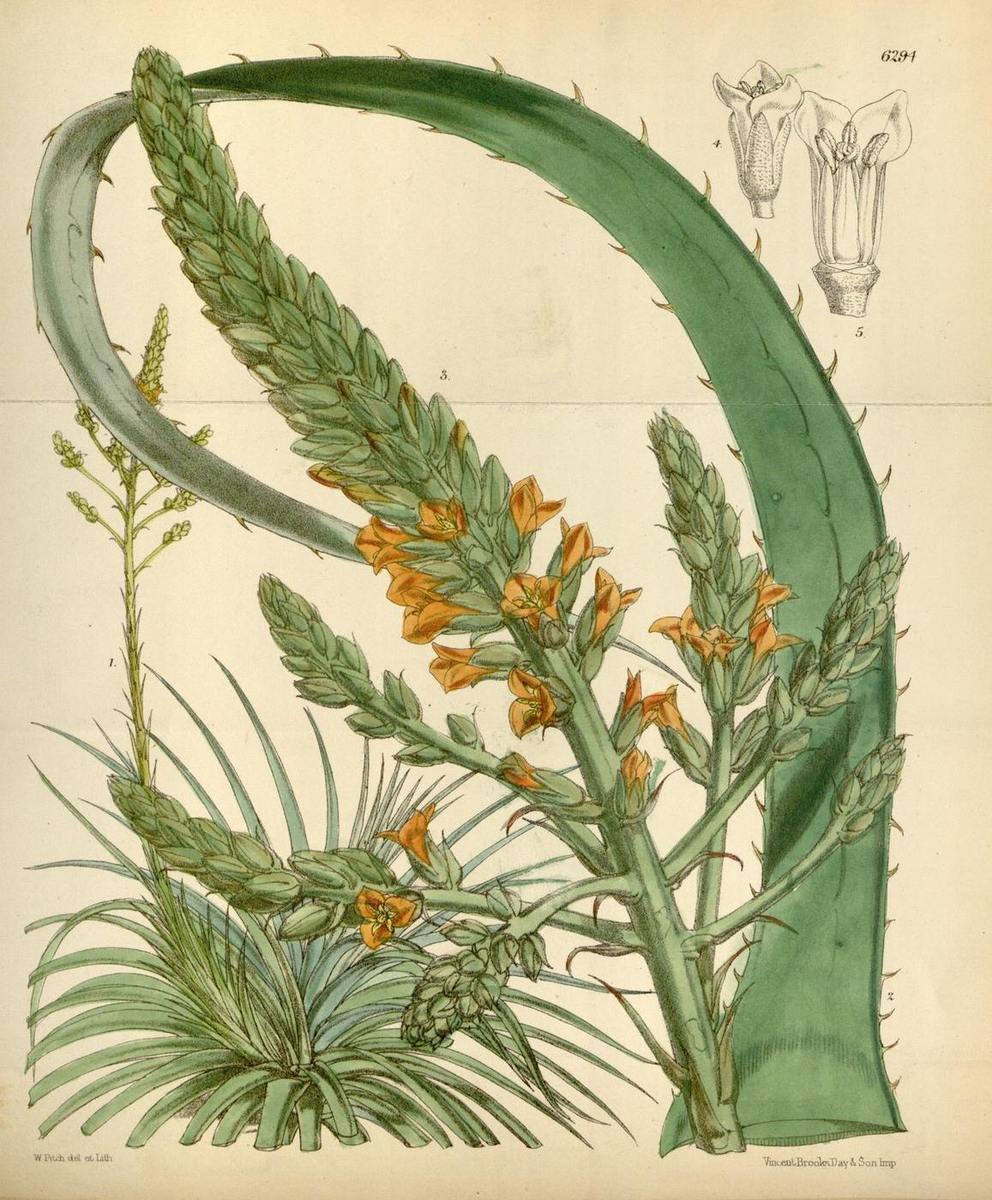
A species of the highland sandstone country of Paraná. The 1877 description was based on a plant that flowered at Kew, and this plate remains the first record of its appearance. The plant we grow is recorded on the Dyckia frigida page of the archive.
Dyckia brevifolia BakerREFUGIUM BOTANICUM, 1870
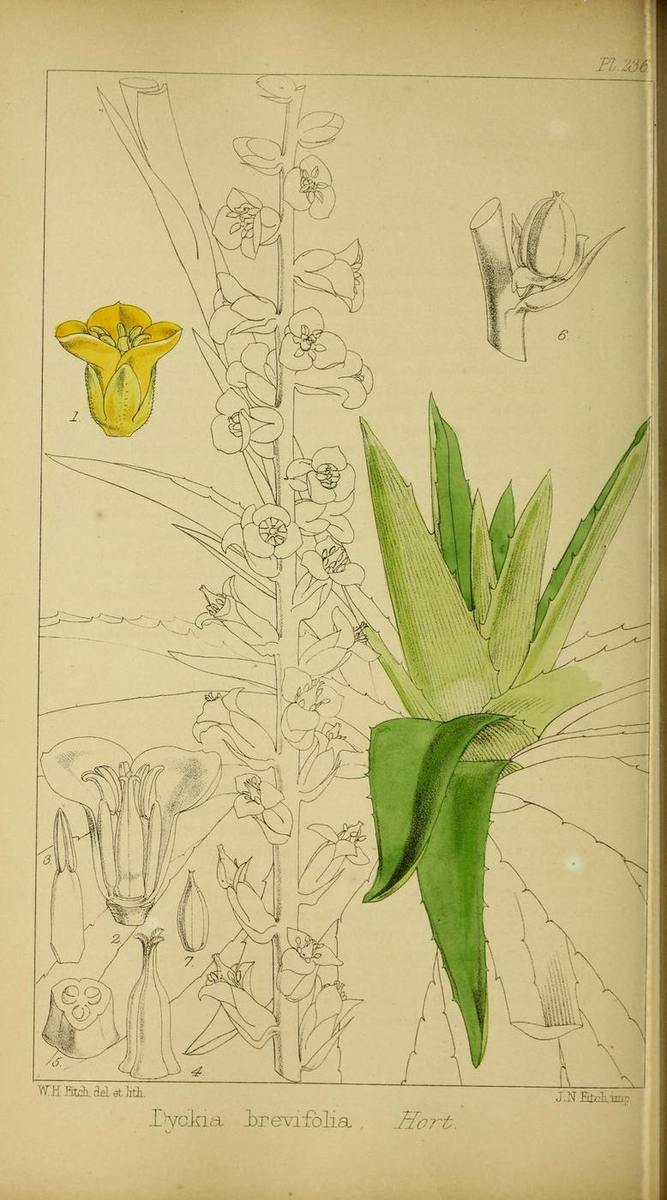
Known as a species that grows in colonies on rocks along rivers. The plate was drawn from a plant circulating in London horticulture; its caption reads “Hort.” — of garden origin.
Dyckia encholirioides (Gaudich.) MezVOYAGE DE LA BONITE, 1851
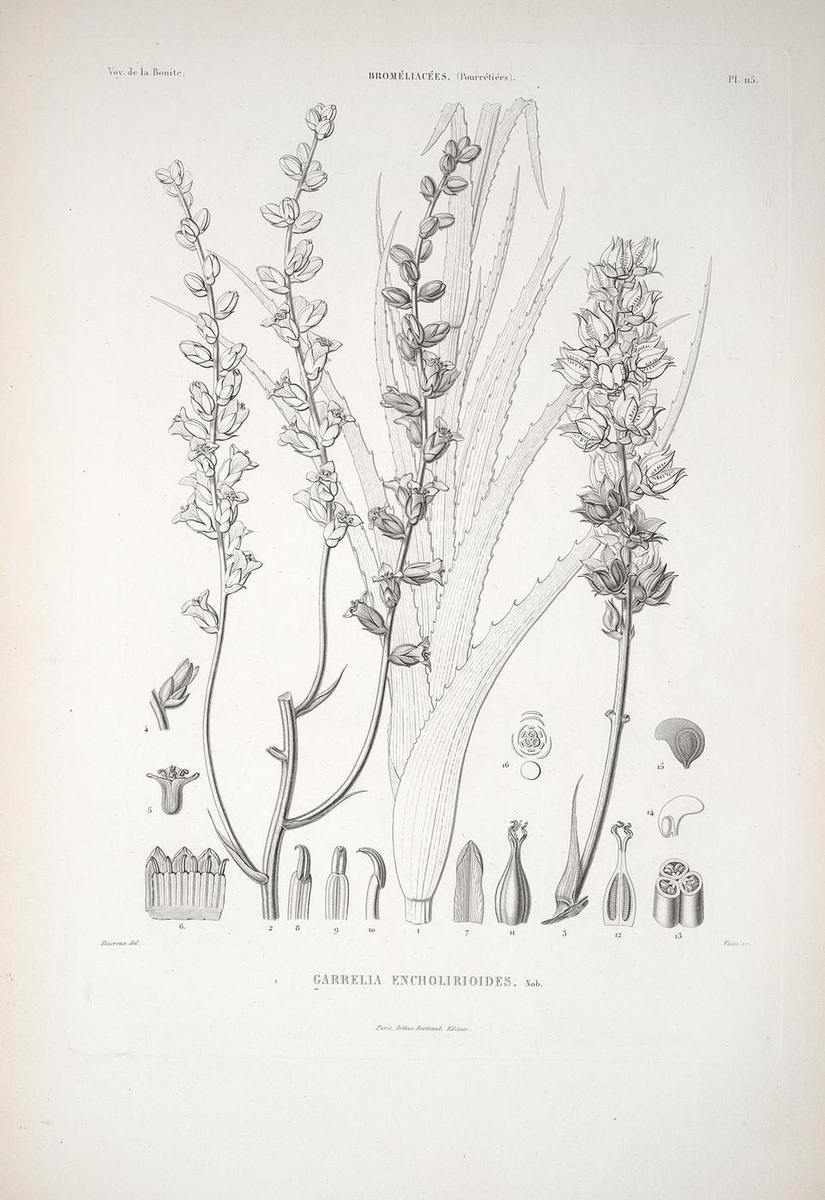
Drawn from collections made on a French exploring voyage (1836–37), this is one of the earliest plates. The core of its present distribution, centred on Santa Catarina, agrees well with recent observation records.
About these platesABOUT THESE PLATES
Only public-domain plates published between 1851 and 1877 are shown. Plates in recent papers (from 2002 onwards) and the line drawings of the Smith & Downs monograph (1974) remain in copyright and are not included.
SourcesSOURCES
Curtis's Botanical Magazine, vol. 103, Tab. 6294 (1877). Refugium Botanicum, vol. 4, Tab. 236 (1870). C. Gaudichaud-Beaupré, Voyage autour du monde sur la corvette La Bonite, Botanique atlas, Pl. 115 (1851). All plate images were obtained from Internet Archive (scans held by the Biodiversity Heritage Library).
Researched: November 2026