
NOTES — RESEARCH NOTES
Habitats and Conservation Assessments
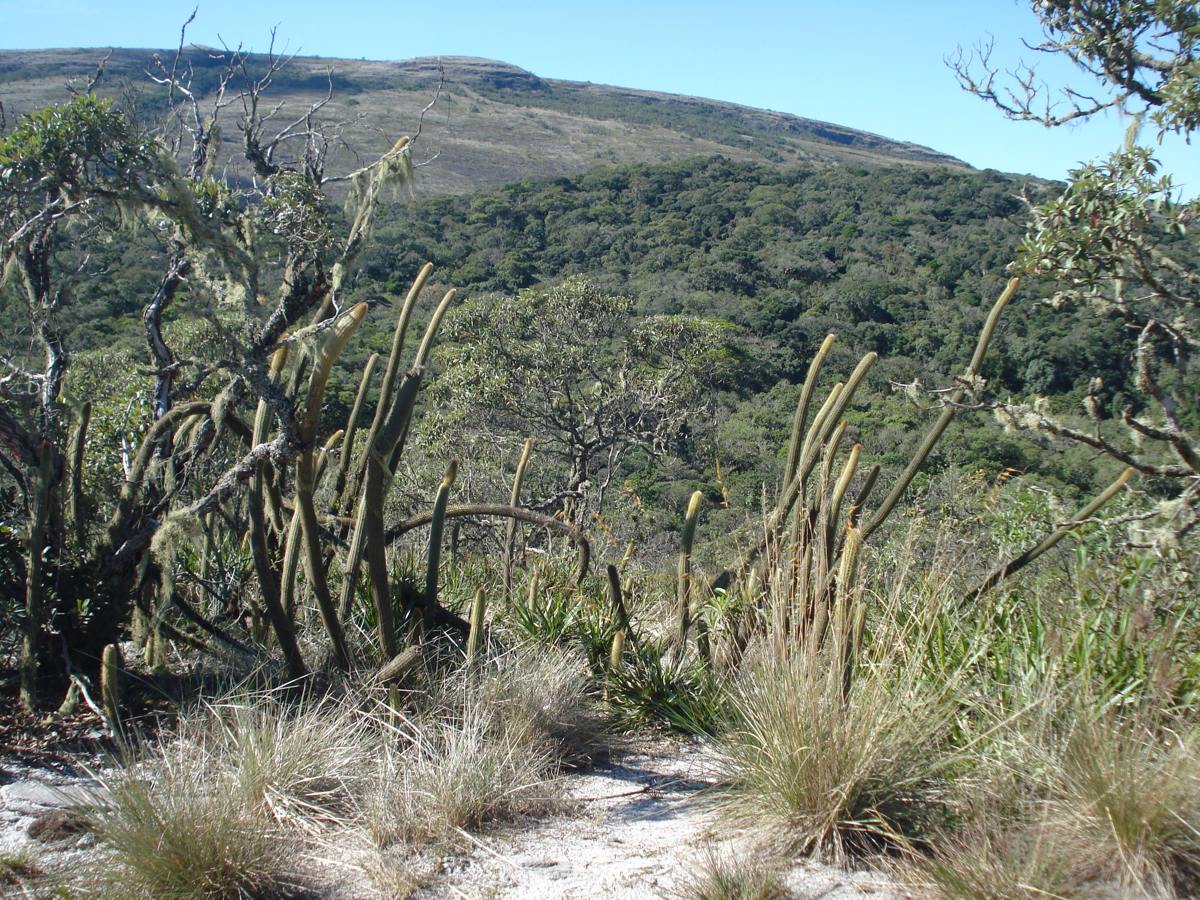
Many Dyckia species grow only on a handful of rock outcrops and highlands in Brazil. This note gathers the species among them that carry an official conservation assessment — how to read the assessments, and what is being lost in their habitats — with each source kept apart. The basis is Brazil's national list, the official list of threatened flora. State lists, the IUCN Red List, papers and personal records are set alongside it, never merged into it, with their sources named. The distributions themselves are mapped in “Species Distributions”.
How to Read the CategoriesHOW TO READ THE CATEGORIES
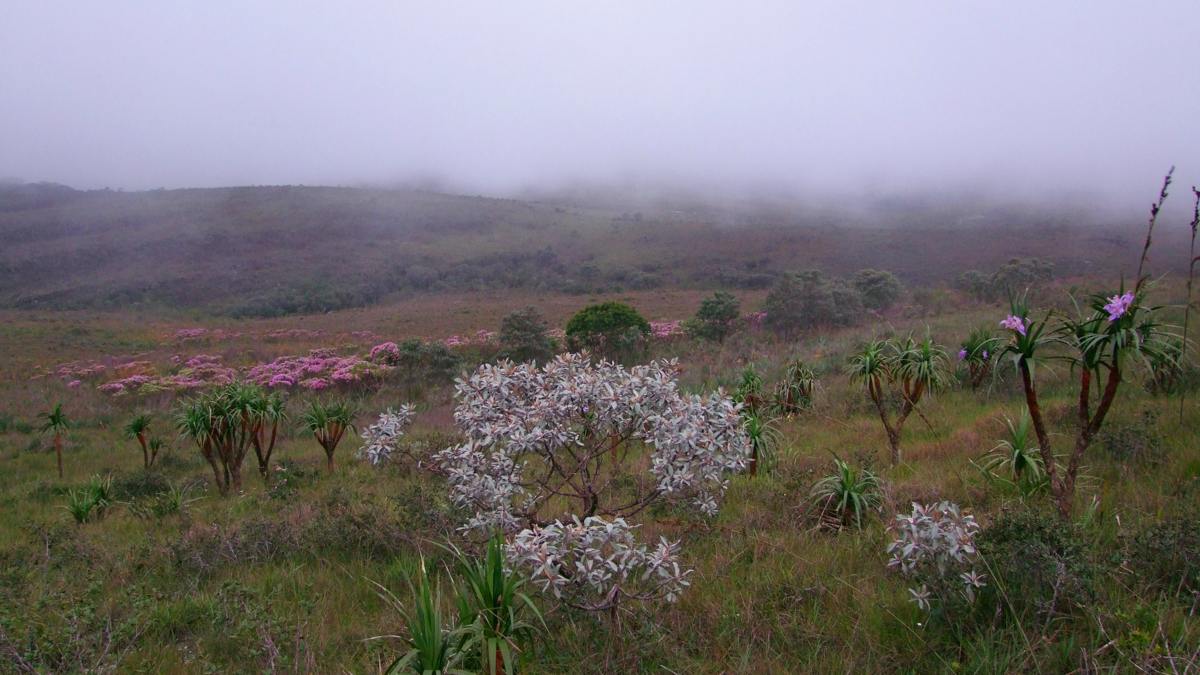
Conservation assessments widely use the categories of the IUCN Red List, and Brazil's national list assesses along the same scale. In order of severity:
- EX (Extinct) — gone, in the wild and in cultivation alike.
- EW (Extinct in the Wild) — extinct in the wild, surviving only in cultivation.
- CR (Critically Endangered) — the most severe crisis rank, one step before extinction.
- EN (Endangered) — at high risk of extinction in the wild.
- VU (Vulnerable) — at increasing risk of extinction.
- NT (Near Threatened) — close to qualifying for a threatened rank in the near future.
- LC (Least Concern) — at low risk of extinction for now.
There is also DD (Data Deficient), for species whose records are too thin to assess. CR, EN and VU together form the range called “threatened”. As far as we can confirm, no Dyckia stands on the national list as EX or EW.
Dyckia on the National ListDYCKIA ON THE NATIONAL LIST
Brazil's national list is the official list laid down by ordinance of the Ministry of the Environment. The current version is Portaria GM/MMA nº 1.783/2026 (issued in October 2026), with assessments coordinated by CNCFlora, the national centre for plant conservation. The Dyckia on the list are these. Species with a page on this site are linked from their names.
CR (Critically Endangered)
| Dyckia agudensis | Also CR on the Rio Grande do Sul state list. |
|---|---|
| Dyckia biflora | Transferred from Encholirium biflorum. |
| Dyckia delicata | Also CR on the Rio Grande do Sul state list. |
| Dyckia disjuncta | Transferred from Encholirium disjunctum. |
| Dyckia distachya | Habitats lost under dam reservoirs are on record (see “Dams and the riverside rock species”). |
| Dyckia hatschbachii | Known only from the type specimen, collected in 1951. |
| Dyckia hennigiana | Renamed from Encholirium irwinii. |
| Dyckia longiflora | Transferred from Encholirium longiflorum. |
| Dyckia martinellii | |
| Dyckia monticola | |
| Dyckia pedicellata | Transferred from Encholirium pedicellatum. |
| Dyckia penduliflora | Renamed from Encholirium kranzianum. |
| Dyckia ursina | |
| Dyckia vogelii | Transferred from Encholirium vogelii. |
EN (Endangered)
| Dyckia argentea | Newly listed in the 2026 edition. Whether it is the same taxon as mezii is unconfirmed (see “Divided assessments and unofficial mentions”). |
|---|---|
| Dyckia brachyphylla | Newly listed in the 2026 edition. |
| Dyckia caudata | Renamed from Encholirium gracile. |
| Dyckia fosteriana | The collecting of mature plants is among the stated reasons (see “Mining, land conversion and collecting”). |
| Dyckia heloisae | Transferred from Encholirium heloisae. |
| Dyckia horrida | Transferred from Encholirium horridum. |
| Dyckia ibiramensis | CR on the Santa Catarina state list. Its plant numbers fell sharply in a 2024 survey (see “Dams and the riverside rock species”). |
| Dyckia luxor | Transferred from Encholirium luxor. |
| Dyckia maritima | |
| Dyckia pectinata | Newly listed in the 2026 edition. |
| Dyckia rariflora | Iron-ore mining is reported as the main pressure (see “Mining, land conversion and collecting”). |
| Dyckia reitzii | Also EN in the IUCN assessment; CR, more severely, on a state list (see “Divided assessments and unofficial mentions”). |
| Dyckia remotiflora | |
| Dyckia scrutor | Transferred from Encholirium scrutor. |
| Dyckia viridiflora | Renamed from Encholirium splendidum. |
VU (Vulnerable)
| Dyckia meziana | Transferred from Deuterocohnia meziana. A different species from our mezii. |
|---|
In the 2026 revision, no species carried over from the 2022 list changed category; the species formerly listed under Encholirium, and Deuterocohnia meziana, moved to Dyckia names. The newly added species are argentea, brachyphylla and pectinata.
Dams and the Riverside Rock SpeciesDAMS AND THE RIVERSIDE ROCK SPECIES
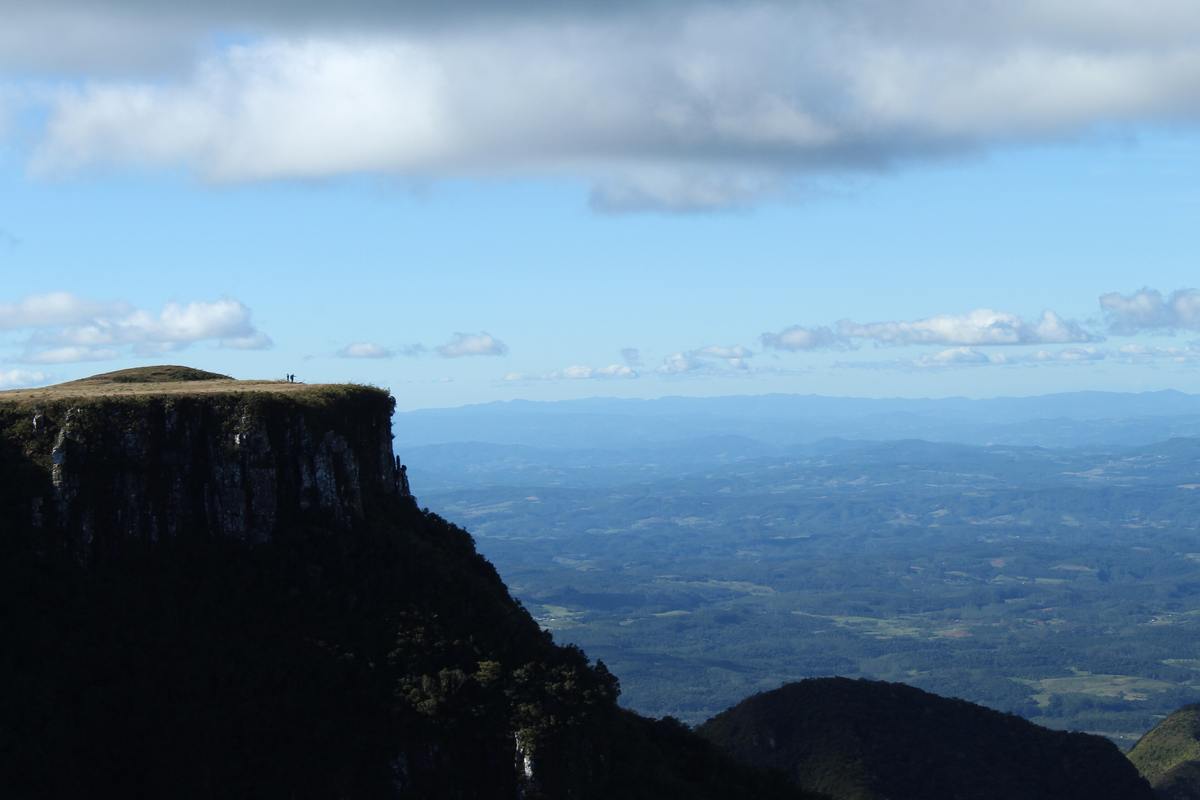
Species that live on rocks along river rapids (rheophytes) have had whole habitats drowned under hydroelectric reservoirs.
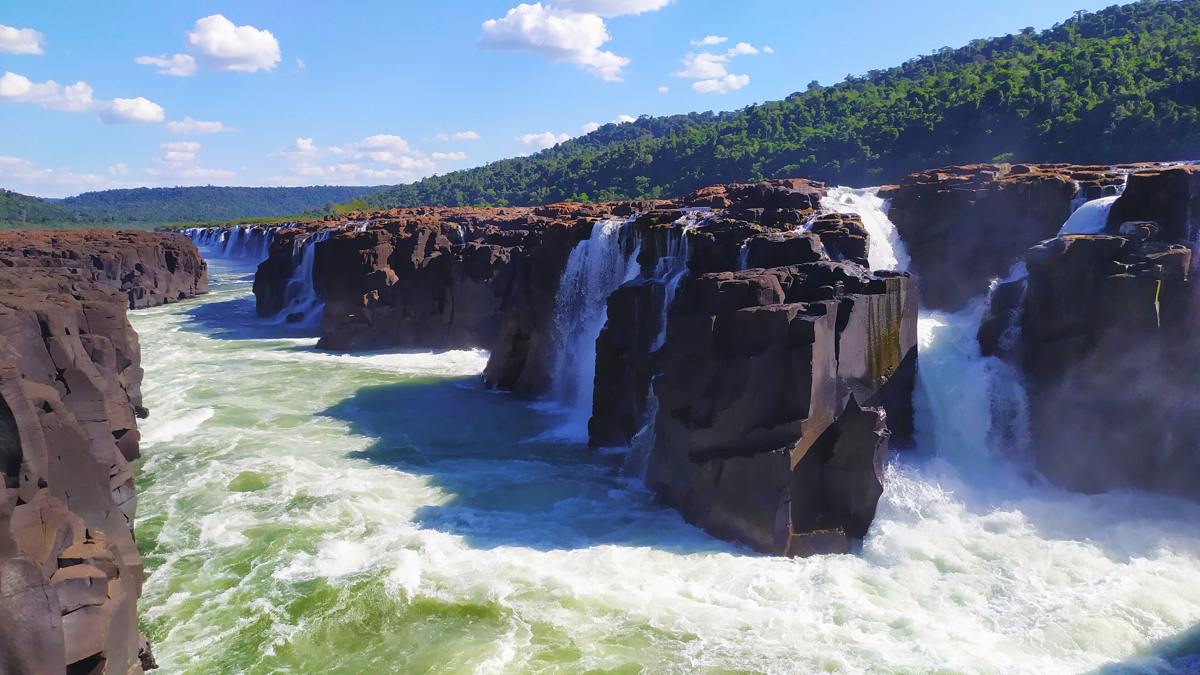
Dyckia distachya (CR)
This species grows along the rapids of the Uruguay and Pelotas rivers. Eight wild populations were known; the reservoirs of the Itá, Machadinho and Barra Grande dams drowned the sites, and the one wild population now known is at Salto do Yucumã in Turvo State Park, Rio Grande do Sul (a genetic study of 2012). Ahead of one dam's closure, plants gathered near Chapecó were moved into the gene bank of the Federal University of Santa Catarina, where they are kept ex situ. A background paper for a dialogue process, on the other hand, writes that the species is “considered extinct in Brazil, with repopulation under way” — the two accounts differ in timing and definition.
Constantino of Dyckia Brazil records that the type locality of the aurea form, on the Uruguay River, was lost to the construction of the Itá dam (a personal field record).
Dyckia brevifolia (not on the national list / EN on a state list)
A rock species of the Itajaí-Açu River in Santa Catarina, brevifolia does not stand on the national list, but Rio Grande do Sul's state list assesses it as EN (Endangered). A 2024 population survey reported the number of plants (counted as rosettes) down by 56% (a Federal University of Santa Catarina thesis, 2025). The colony at Colônia Subida, near the Salto Pilão power station, was stated to have disappeared in 2024 in a post by a local environmental association — the loss of that one population, not of the species. Plants raised from its seed have been donated to the Rio do Sul botanical garden.
Dyckia ibiramensis (EN)
Known only from about 1.1 km along the Itajaí do Norte River at Ibirama, Santa Catarina. CNCFlora's assessment (2012) names hydroelectric installations as the main threat, and licensed small-hydro plans would have drowned two subpopulations completely. Santa Catarina's state list rates it CR (Critically Endangered), more severely than the national list. In the same 2024 survey as brevifolia, its plant numbers (rosette counts) were reported down by 64%.
Mining, Land Conversion and CollectingMINING, LAND CONVERSION AND COLLECTING
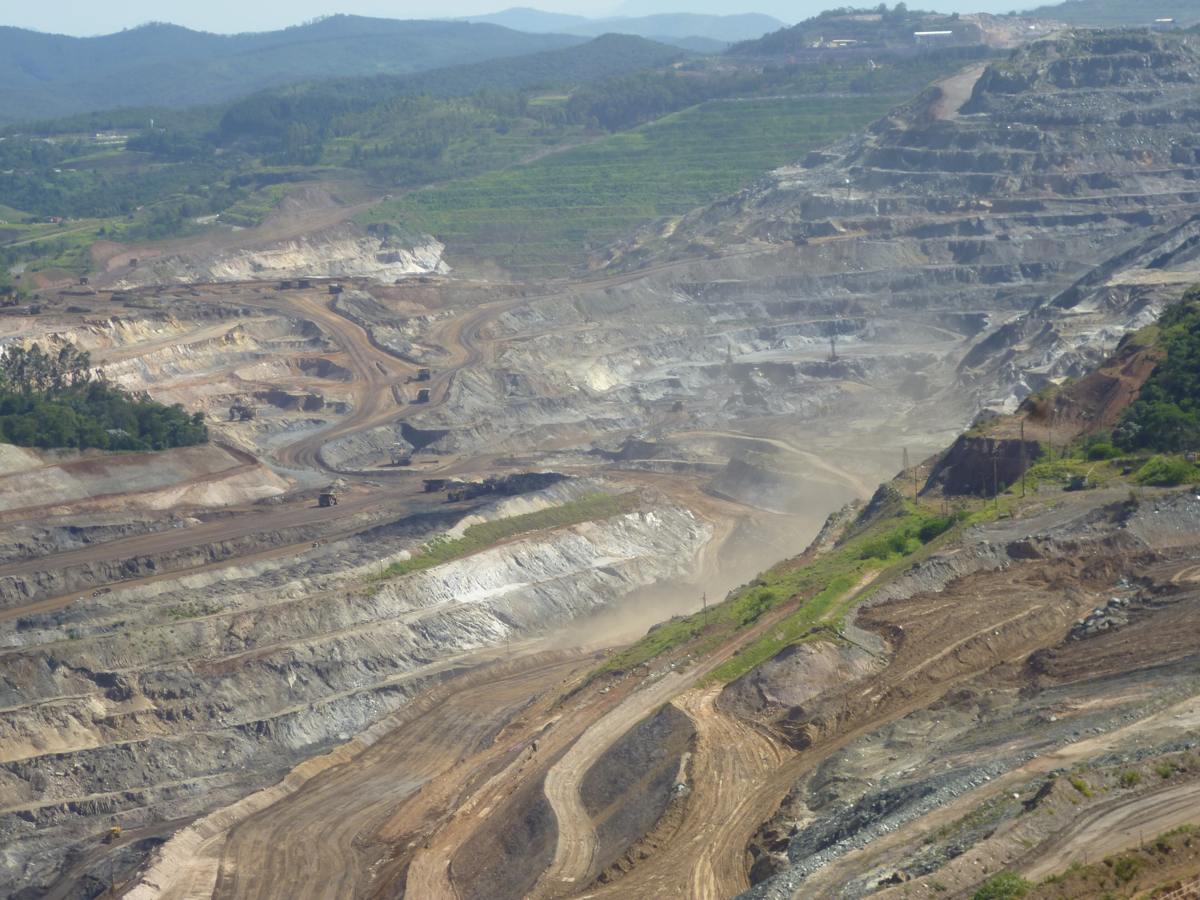
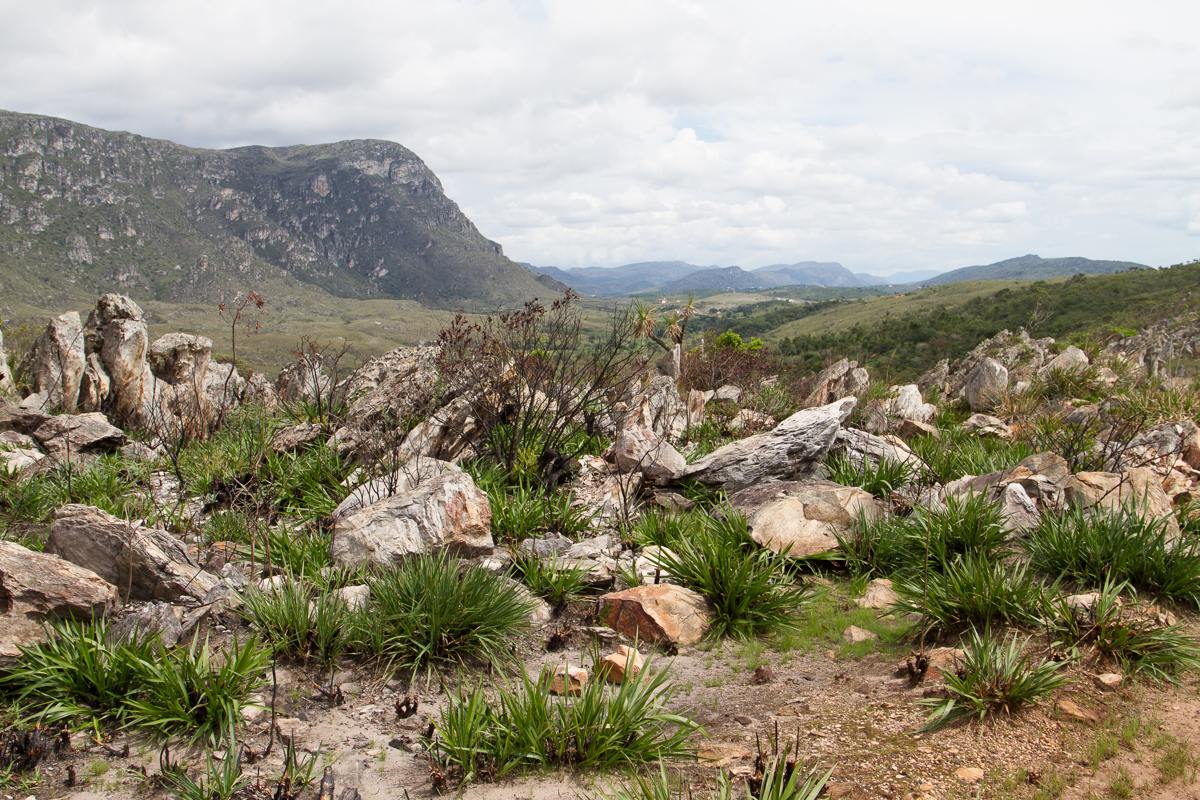
Dyckia rariflora (EN) grows in the iron-rich campos rupestres (canga) of the Quadrilátero Ferrífero, the iron quadrangle of Minas Gerais. The main pressure is iron-ore mining, and a state environmental document records the species within the direct impact area of a mine's waste-rock pile.
Dyckia fosteriana (EN) is confined to Paraná. CNCFlora's assessment (2012) gives habitat loss and fragmentation, and the collecting of mature plants. It is described as perhaps the most ornamental and popular species in the genus, and that collecting pressure is among the stated reasons.
Dyckia hatschbachii (CR) is known only from the type specimen, collected in 1951, and has not been found again since. No source we have states outright that the type locality was destroyed; what can be confirmed is the absence of any rediscovery.
For listed species whose assessment text we have not been able to confirm, this note gives the category and the source only, and no reason.
Divided Assessments and Unofficial MentionsDIVIDED ASSESSMENTS AND UNOFFICIAL MENTIONS
Dyckia reitzii stands as EN (Endangered) on the national list, but as CR (Critically Endangered) on the Rio Grande do Sul state list; the IUCN assessment (2012) also gives EN, while treating its presence in that state as “uncertain”. Specimens and field records from the state exist — the conclusion depends on which assessment you read.
For Dyckia monticola, a user-edited gardening database overseas carries the entry “Extinct in the Wild (EW)”. That is not an official assessment. Officially, the species is CR (Critically Endangered) on the national list.
The relationship between Dyckia argentea and mezii is likewise unsettled. In the Bromeliad Taxon List of Gouda and Butcher, argentea Mez is treated as a synonym of mezii, a name published to replace it. Whether the plant the 2026 national list entered as “Dyckia argentea” is the same taxon as mezii has not been confirmed against the assessment sheet. We do not treat the two as one here, and the mezii page carries no assessment.
The distribution maps are in “Species Distributions”.
SourcesSOURCES
Annex to Portaria GM/MMA nº 1.783/2026 (issued 26 October 2026; published in the Diário Oficial da União on 28 October 2026); the Dyckia entries were checked against the official gazette text. Portaria GM/MMA nº 300/2022 (the 2022 national list). CNCFlora (Jardim Botânico do Rio de Janeiro) assessment pages: fosteriana (2012), ibiramensis (2012). The IUCN Red List assessment of Dyckia reitzii (assessed 2012, published 2014). The Rio Grande do Sul state list (Decreto Estadual nº 52.109/2014); the Santa Catarina state list (CONSEMA, 2014). Pompelli & Guerra (2004), Crop Breeding and Applied Biotechnology 4: 273–279; the 2012 microsatellite study of distachya. Ferreira (Federal University of Santa Catarina thesis, 2025), reporting the 2024 population survey; the Brazilian Journal of Biology (2023) distribution study of brevifolia. Associação Ambientalista Pimentão Alto Vale, November 2025 (on the disappearance of the Subida colony and the donation). BMC Research Notes (2024), on rariflora and iron mining. Gouda & Butcher, Bromeliad Taxon List (for the synonymy).
Researched: November 2026