
NOTES — RESEARCH NOTES
Brazil, the Homeland — and Dyckia Brazil
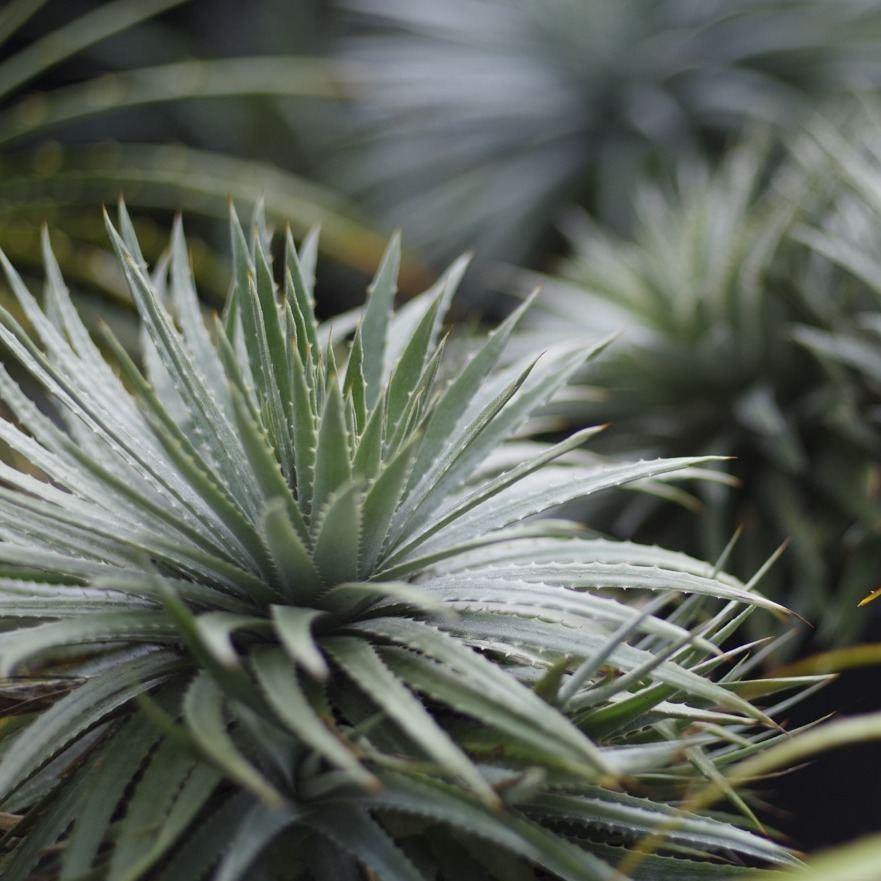
If America is the home of Dyckia's hybridising culture, Brazil is the home of its species. Roughly seventy percent of the genus lives there, and new species are still being described. On the homeland side, one grower has spent years sending records of habitats and cultivation out to the world: Constantino Gastaldi of Joinville, Santa Catarina, and his blog "Dyckia Brazil". These notes summarise his footprint, within what is publicly documented.
The HomelandTHE HOMELAND
The centre of Dyckia's distribution is Brazil, in highland rocky grasslands (campos rupestres), savanna (cerrado) and dry thorn forest (caatinga) (see Basics & Morphology). The Flora do Brasil 2020 treatment counts 184 recognised species, of which about 130 occur in Brazil and 121 are endemic to it; the centre of diversity lies in the campos rupestres of Minas Gerais. Many species are narrow endemics, each rocky outcrop with its own face. Descriptions of new species continue, and the names of researchers and growers tied to Brazil — Elton Leme, Eddie Esteves, P.J. Braun among them — recur as their authors.
In concrete terms, the campos rupestres are highland rocky grasslands found mostly above 900 m along the Espinhaço Range, which runs for over 1,000 km from Minas Gerais into Bahia. Their bedrock is quartzite, sandstone or ironstone (canga), and the plants root in rock fissures and thin soil. The same rock vegetation recurs inside the cerrado and the caatinga, where Dyckia dissitiflora grows on isolated inselbergs.
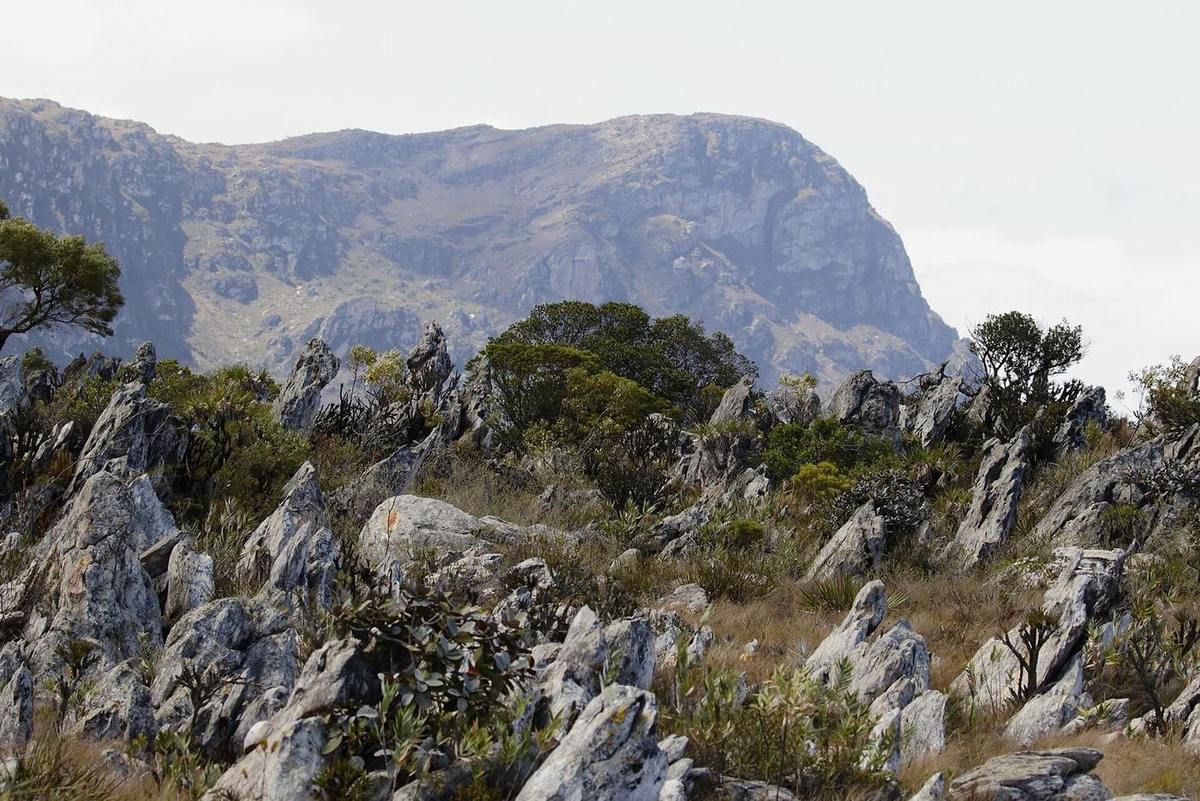
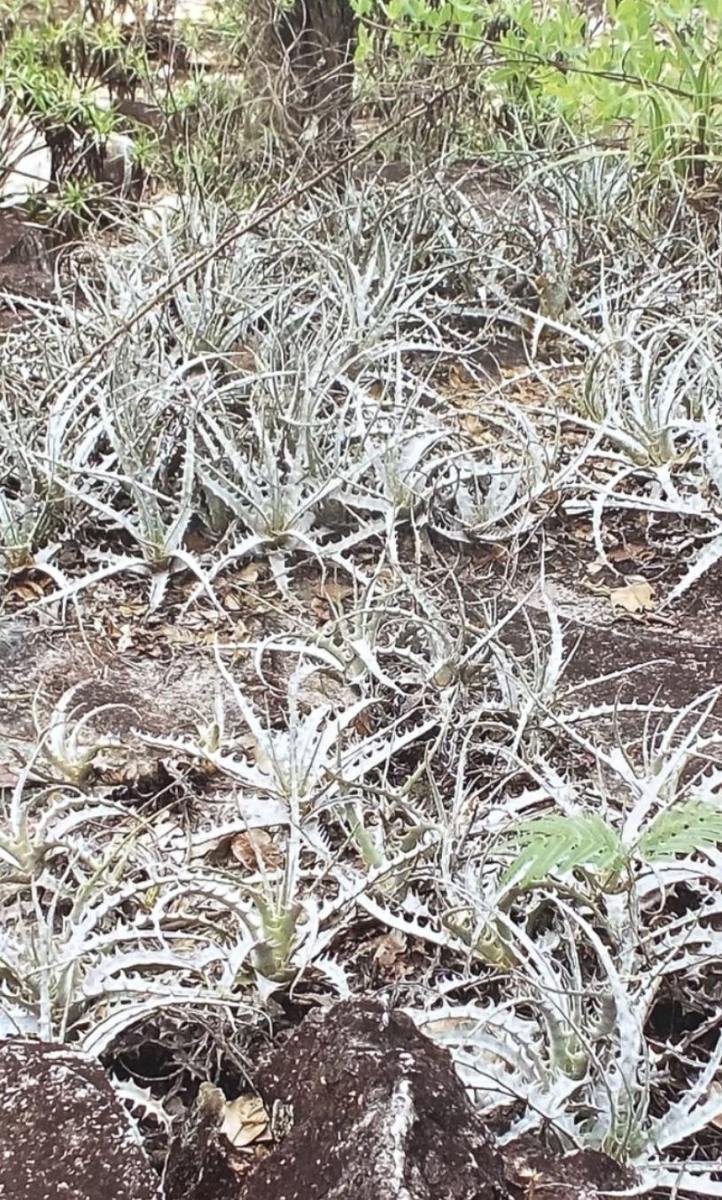
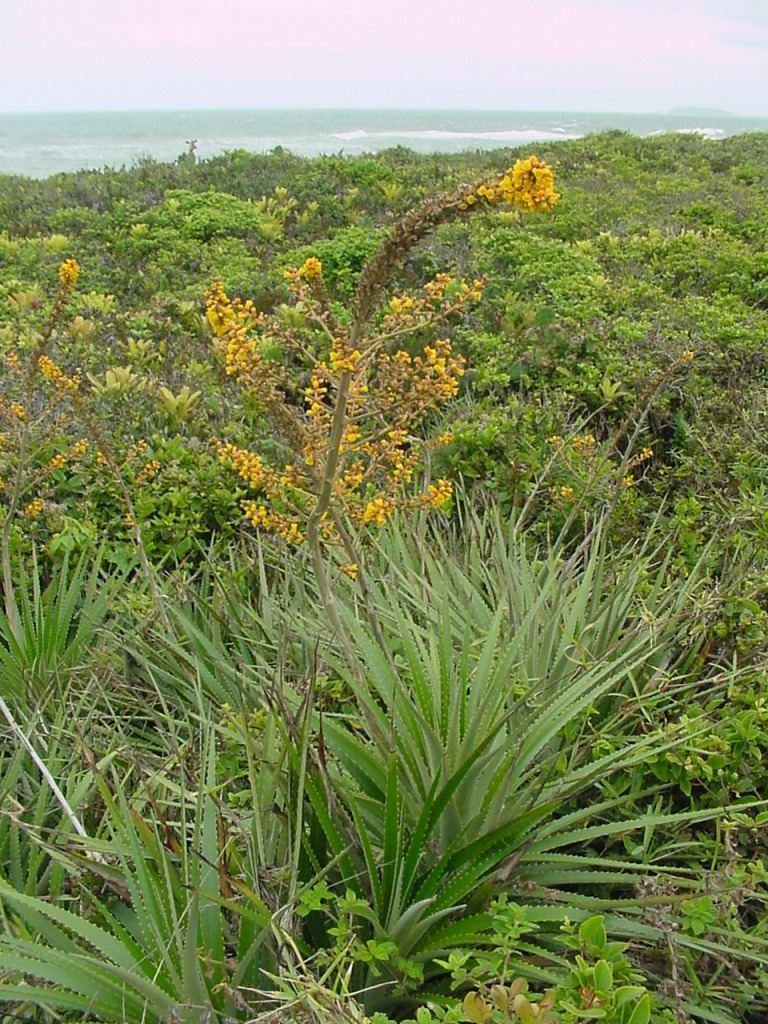
The bedrock changes by region: there are granite and gneiss outcrops, and species on the basalt outcrops of the Serra Geral formation in northern Paraná (Dyckia walteriana). River rocks are another key habitat: Dyckia magnifica grows on basalt escarpments near rivers in Santa Catarina and Rio Grande do Sul, and Dyckia brevifolia is a rheophyte living on the rocks of the riverbed itself. A few species even grow in coastal sand (restinga), such as Dyckia pseudococcinea in Rio de Janeiro — the genus is not confined to the highlands.
Limestone, notably, does not appear in the genus-level lists of Dyckia bedrock. The limestone plants known are ones originally placed in Encholirium: a plant endemic to limestone in western Bahia was described in 2015 as Encholirium splendidum, and after the later name Dyckia splendida proved illegitimate it was renamed Dyckia viridiflora. Whether Encholirium belongs inside Dyckia at all is itself unsettled — Flora e Funga do Brasil and POWO include it, while GBIF keeps it as a separate genus.
Nutrient poverty is the defining trait of these habitats. A review of campos rupestres soils (Silveira et al., 2016; 68 soil profiles) found pH (H₂O) of 3.9–5.2 depending on lithology (4.3 on quartzite, 4.8–5.0 on ironstone), phosphorus of no more than about 4 mg/dm³ at most sites, and soils low in calcium, magnesium and potassium with high exchangeable aluminium. Cerrado soils tell the same story: in the large survey of Lopes & Cox (1977) the median pH was 5.0. Most Dyckia, in other words, live in thin, highly acidic, nutrient-starved soil — or in rock fissures with almost no soil at all.
The climate is equally demanding: rain concentrated in summer, a marked dry season in winter, and — in the high campos rupestres — large swings between day and night temperatures, constant wind, and fire as part of the ecology of the vegetation. The rheophyte Dyckia brevifolia goes further still, living on rapids rocks in the Itajaí-Açú River that are partly to completely submerged when the river rises (the population study of Rogalski et al.).
We read this habitat picture as the backdrop for cultivation: strong sun, thin soil and rock fissures, and starved acidic ground resonate with the strong light and sharp drainage these plants ask for in pots, and with the fact that they do not need rich soil. The habitat numbers themselves, though, are not cultivation optima (for practice, see Growing Dyckia).
At the same time, the habitats themselves are being lost to development and collecting pressure. Records of the species are becoming nearly as precious as the plants.
Constantino GastaldiCONSTANTINO GASTALDI
Constantino Gastaldi is a grower based in Joinville, in the southern Brazilian state of Santa Catarina. He runs the blog "Dyckia Brazil" (dyckiabrazil.blogspot.com), where he has long published observations of habitats and cultivation records in English. An American society newsletter introduced it as a site anyone who loves Dyckia should visit, and a hobbyist's blog noted in 2010 that he was posting large numbers of photographs as material for a planned book, "THE ALLURING DYCKIAS". The blog is still updated, including records of his own crosses (using Baker's ‘Mercury’, among others) and of intergeneric seedlings.
His record-keeping begins with a family memory. By his account, his mother picked up a Dyckia brevifolia that a flood on the Itajaí River had torn from its rock in the early 1970s, and he still grows its descendants. In the early 1990s he himself collected Dyckia brevifolia var. subidensis. He is a grower, but also a witness of the habitats — and that double stance marks his writing.
Field & ConservationFIELD & CONSERVATION
His article of March 2014 shows the stance clearly: Brazil once held not grass fields but Dyckia fields; Dyckia are coloniser plants that make soil for others; and — his warning — "they are disappearing". Looking at habitats as something being lost, not only as a hobby subject, runs underneath everything on Dyckia Brazil.
The interest reached into taxonomy. With the German researcher P.J. Braun he is a co-author of the new species Dyckia apiunensis and Dyckia seringeriana (the author name C.Gastaldi can be checked in the World Flora Online). And when Dyckia magnifica was formally described by Büneker and colleagues in 2023, the etymology section of the protologue recorded that the epithet magnifica was created and disseminated by Constantino Gastaldi, who had distributed specimens under that name to collectors and botanical collections. He stands at a junction between hobbyist and taxonomist that only the homeland side really offers.
Records & CirculationRECORDS & CIRCULATION
His footprint is in the BCR as well. For the registration of ‘Spider Witch’ (BCR #10166), Gastaldi handled the registration document (Reg. Doc.) in 2009. The registered plant itself is recorded as a Brazilian import that had come from California many years earlier — a hint of the old two-way traffic of plants between Brazil and the United States. His part in coining the name Orthophytum ‘Roberto Menescal’ for a Brazilian-grown plant (2017) is likewise recorded in Derek Butcher's research writing in Australia. His own hybrid ‘Koka Wolff’ carries a naming story of the same kind: it honours his late friend, Ms. Koka Wolff. She collected alongside him in the field, and hebdingii was the species she loved most.
It would not be accurate to picture him as a large export nursery. Dyckia Brazil is better understood as a record-keeping outpost on the homeland side. Its English-language writing on habitats and species was read by American societies and nurseries, and became one of the windows through which Brazilian species knowledge reached the world's hobbyists. Many of the species clones that became parent material in America rest on this homeland-side accumulation of records and circulation (see The American Roots of Dyckia).
From Brazil to the WorldFROM BRAZIL TO THE WORLD
The picture that emerges is this: Brazilian species and records became, in the hands of American nurseries and breeders, a hybridising culture; that culture grew large in Thailand; and it now reaches the hobbyist scene in Japan. Brazil stands at the head of the whole flow. That this archive can record species as species and crosses as crosses is possible only because record-keepers on the homeland side left the information behind.
SourcesSOURCES
Dyckia Brazil (Constantino Gastaldi's blog, dyckiabrazil.blogspot.com; including the March 2014 article "Understanding Dyckias"). World Flora Online (the author name of Dyckia apiunensis P.J.Braun & C.Gastaldi). San Gabriel Valley Cactus & Succulent Society newsletter "Dyckia" (editor's note on Dyckia Brazil). The Danger Garden (2010, on Gastaldi's book project). Bromeliad Cultivar Register (BSI): ‘Spider Witch’ #10166 (registry.bsi.org). Bromeliads in Australia (Derek Butcher's research notes, on the naming of Orthophytum ‘Roberto Menescal’). Flora do Brasil 2020 (the Dyckia treatment by Büneker et al. — species numbers, distribution, endemism). Silveira et al. (2016, Plant and Soil — review of campo rupestre ecology and its compiled soil profiles). Rogalski et al. (population structure of Dyckia brevifolia in the Itajaí-Açú River). Büneker et al. (2023, Phytotaxa — the protologue of Dyckia magnifica). Lopes & Cox (1977), cerrado soil survey (via the review of Haridasan).
Researched: October 2026